
Inari sushi (inarizushi) is sushi rice stuffed into a sweet and savory fried tofu pouch. There is no raw fish, no rolling mat and no knife skills involved, which makes it one of the easiest sushi to make at home. You need cooked sushi rice, seasoned pouches (inari age) and about 30 minutes.
This guide explains what inari sushi is, where the name comes from, how to make it with store-bought or homemade pouches, and how it differs from nigiri, maki and sashimi.
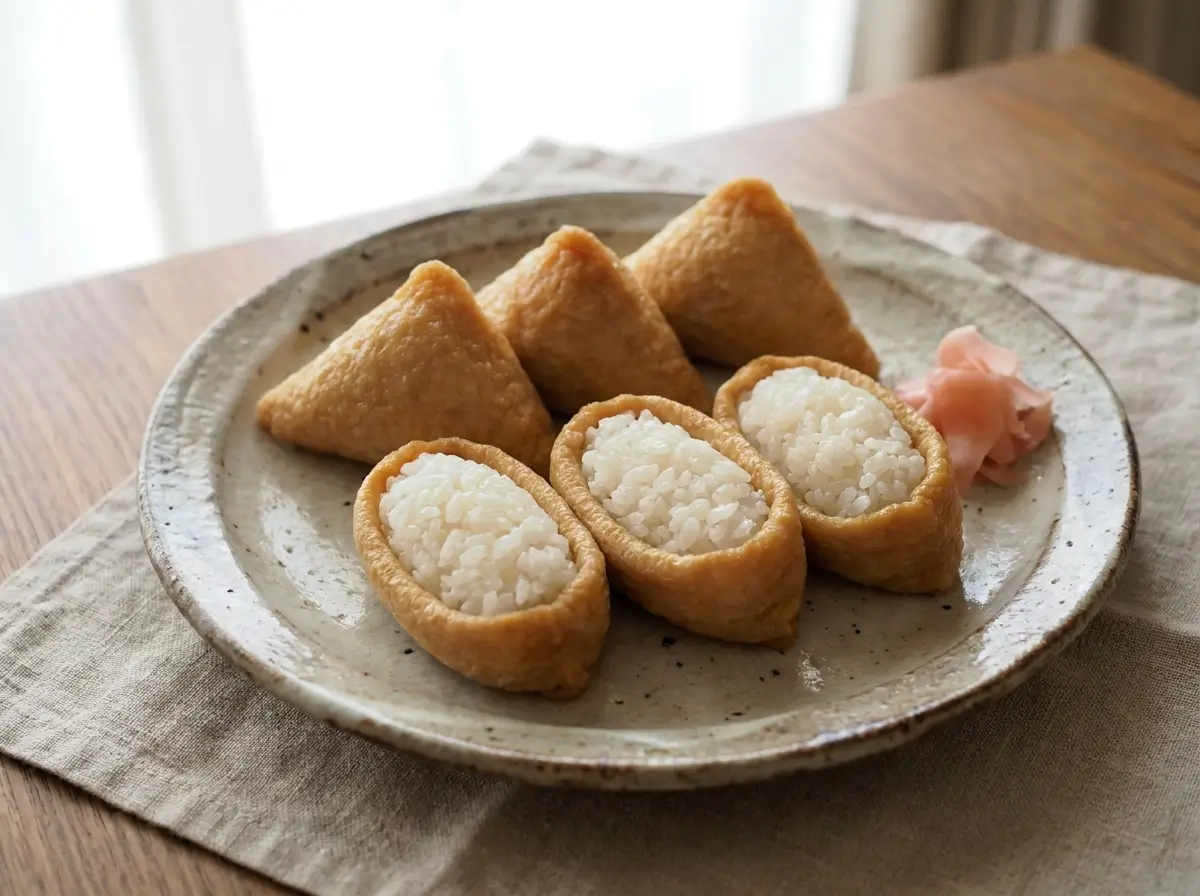

Inari Sushi Recipe: What It Is and How to Make It at Home
- Total Time: 15 minutes
- Yield: 1 omelette (2 to 3 servings) 1x
Description
A soft, layered Japanese rolled omelette seasoned with dashi, mirin and soy sauce, made in a regular frying pan.
Ingredients
- 3 large eggs
- 2 tbsp dashi
- 1 tbsp mirin
- 1 tsp sugar
- 1 tsp soy sauce
- Neutral oil, for the pan
- Grated daikon, to serve (optional)
Instructions
- Beat the eggs gently with the dashi, mirin, sugar and soy sauce until just combined. Try not to add air.
- Heat a non-stick pan over medium-low heat and wipe it with a thin layer of oil.
- Pour in a thin layer of egg and tilt the pan to cover the base. Pop any large bubbles.
- When the egg is mostly set but still slightly wet on top, roll it toward the far edge of the pan.
- Push the roll back to the far side, oil the pan again and pour in another thin layer, lifting the roll so egg flows underneath.
- Roll again, wrapping the new layer around the first. Repeat until the egg is used up.
- Turn the omelette onto a cutting board and press gently into a neat block. Rest 1 to 2 minutes.
- Slice and serve warm or at room temperature, with grated daikon if you like.
Notes
For tamago nigiri, cut thin slices and set them on small portions of sushi rice. For a more delicate omelette, add the dashi one spoonful at a time, since more dashi makes the egg harder to roll. Keeps up to 3 days in the fridge.
- Prep Time: 5 minutes
- Cook Time: 10 minutes
- Category: Breakfast
- Method: Pan-fried
- Cuisine: Japanese
Nutrition
- Serving Size: ⅓ omelette
Keywords: tamagoyaki, Japanese rolled omelette, tamago sushi
What Is Inari Sushi?
Inari sushi is a type of sushi where vinegared rice is packed inside a pouch of thin fried tofu called aburaage. The pouch is simmered in a sweet soy and dashi broth, so it tastes slightly sweet and juicy against the tangy rice. It is vegetarian by default (check that your dashi is plant-based if you need it vegan).
In Japan it is a classic of bento boxes, picnics, supermarkets and family gatherings. It is often eaten with miso soup or alongside other sushi.
Why Is It Called Inari?
The name comes from Inari, the Shinto deity of rice and agriculture. Foxes are Inari’s messengers, and folklore says they love fried tofu. Fried tofu became a common offering at Inari shrines, and the sushi took the name. That is why you may also hear it called kitsune-zushi (fox sushi) or O-Inari-san.
Sources place its rise in Edo (today’s Tokyo) in the 1830s to 1840s, when it spread as cheap, casual street food.
Inari vs Nigiri, Maki and Other Sushi
Inari is closest to nigiri because both are built on a small portion of seasoned rice, but the topping is replaced by a tofu pouch that holds the rice. Unlike maki, nothing is rolled in nori. Unlike sashimi and nigiri, it contains no fish, so it works well for beginners and for guests who avoid raw seafood. For a deeper look at the main styles, see our guide to sashimi vs nigiri.
Inari Sushi Ingredients
This makes about 12 pouches.
- 12 seasoned fried tofu pouches (inari age), store-bought or homemade
- 1½ cups uncooked Japanese short-grain rice (about 3½ cups cooked)
- 1½ cups water
- 4 tbsp unseasoned rice vinegar
- 2 tbsp sugar
- 1 tsp fine salt
- 1 tbsp toasted white sesame seeds
- Optional: pickled ginger, shiso leaves, a small piece of kombu for cooking the rice
How to Make Inari Sushi
1. Cook the rice
Rinse the rice until the water runs almost clear, then drain. Cook it with the water (and the kombu if you use it). Use slightly less water than for plain rice so the grains stay firm enough to hold their shape inside the pouch.
2. Make the sushi vinegar
Warm the rice vinegar, sugar and salt in a small pan or the microwave just until the sugar dissolves. Let it cool.
3. Season the rice
Spread the hot rice in a wide bowl or on a baking sheet. Drizzle the vinegar over it and fold gently with a paddle, cutting through the rice rather than stirring so the grains do not turn mushy. Fan the rice if you can, then fold in the sesame seeds. Let it cool to room temperature before stuffing, because warm rice can tear the pouches.
4. Prepare the pouches
Drain the pouches and gently squeeze out the extra liquid. Keep a little of the liquid to wet your hands. Open each pouch carefully with your fingers.
5. Fill and shape
With damp hands, shape about ¼ cup of rice into a small oval. Slide it into a pouch, push the rice into the corners, then fold the open edges over and place the pouch seam side down. Repeat with the rest.
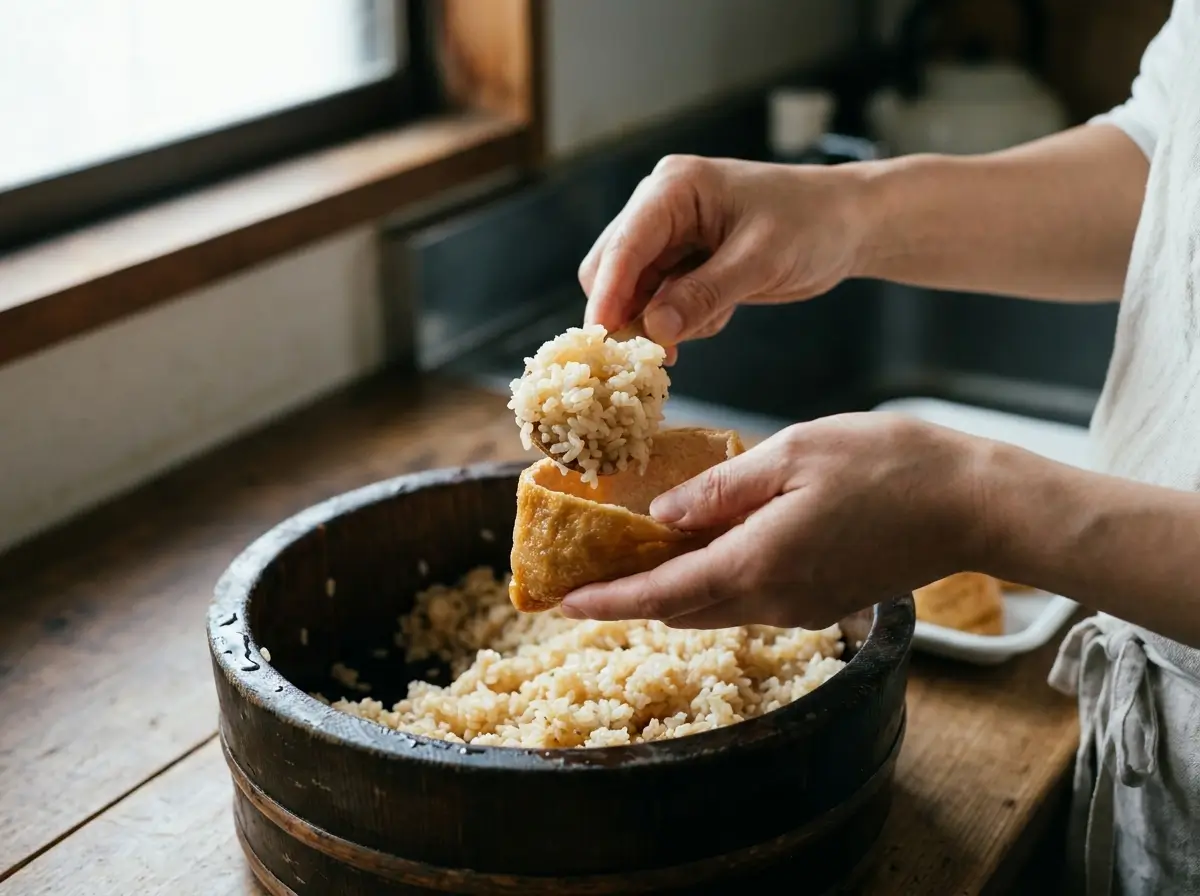
Homemade Inari Age (Pouch Seasoning)
Canned or vacuum-packed seasoned pouches are sold in Asian grocery stores and are the quickest option. If you buy plain fried tofu (aburaage) instead, pour boiling water over it to remove excess oil, then simmer it in dashi seasoned with sugar, soy sauce and mirin until it absorbs the liquid. Cool, then squeeze gently before filling. Making your own lets you control the sweetness.
Triangle or Rectangle? Regional Shapes
Both styles are fully closed pouches. The difference is the shape. In Tokyo, inari sushi is usually an oval or slim bale. In Osaka and the Kansai region it is often a triangle that looks like a fox’s ear. You can also leave the top open and add toppings such as cucumber, salmon roe, shredded egg or cooked shrimp. If you like roe, our guide to masago, tobiko and ikura explains which one to choose.

Filling Ideas
- Plain sushi rice with sesame seeds (the classic)
- Rice mixed with furikake
- Rice with chopped shiitake mushrooms and carrot
- Rice with chopped pickled ginger for a sharper taste
- Open-top with rice, then a spoonful of cooked egg such as tamagoyaki cut small
What to Serve With Inari Sushi
Serve it with miso soup, a cucumber salad, pickles or as part of a bento. It also sits well on a sushi platter next to nigiri and maki.
Storage
Inari sushi is best the day you make it. Keep it covered at cool room temperature for a few hours, or refrigerate it tightly wrapped for up to 24 hours and let it come back toward room temperature before eating, since cold rice turns hard. Leftover seasoned pouches keep in their liquid for 2 to 3 days in the fridge.
Inari Sushi FAQ
Is inari sushi vegetarian?
Usually yes, since it is rice and fried tofu. The seasoning broth is often made with dashi, which can contain fish, so check the label or use kombu dashi if you need it fully plant-based.
Is inari sushi raw?
No. The rice is cooked and the tofu pouch is fried and simmered. Plain inari contains no raw fish.
What does inari sushi taste like?
Slightly sweet and savory from the soaked tofu, with the light tang of vinegared rice and a little crunch from sesame.
Do I need sushi vinegar for inari sushi?
Yes. Season the rice with rice vinegar, sugar and salt as shown above. Plain steamed rice tastes flat inside the sweet pouch.
Why do my inari pouches tear?
Usually the rice is too warm or the pouch was pulled open too fast. Cool the rice, press the pouch gently to loosen it and open it with your fingers from the cut side.
Conclusion
Inari sushi is a no-fish, no-roll sushi that anyone can make with seasoned rice and tofu pouches. Start with store-bought pouches, then try a homemade batch once you know how sweet you like them.