
Masago, tobiko and ikura are three kinds of fish roe used in sushi. Masago is the tiny, pale roe of capelin, a small smelt. Tobiko is the roe of flying fish: slightly larger, crunchy and often colored. Ikura is salmon roe: the biggest, the juiciest and the most expensive of the three. Below you will find how to tell them apart on a menu, how each one tastes, and how they are used in rolls, nigiri and bowls.
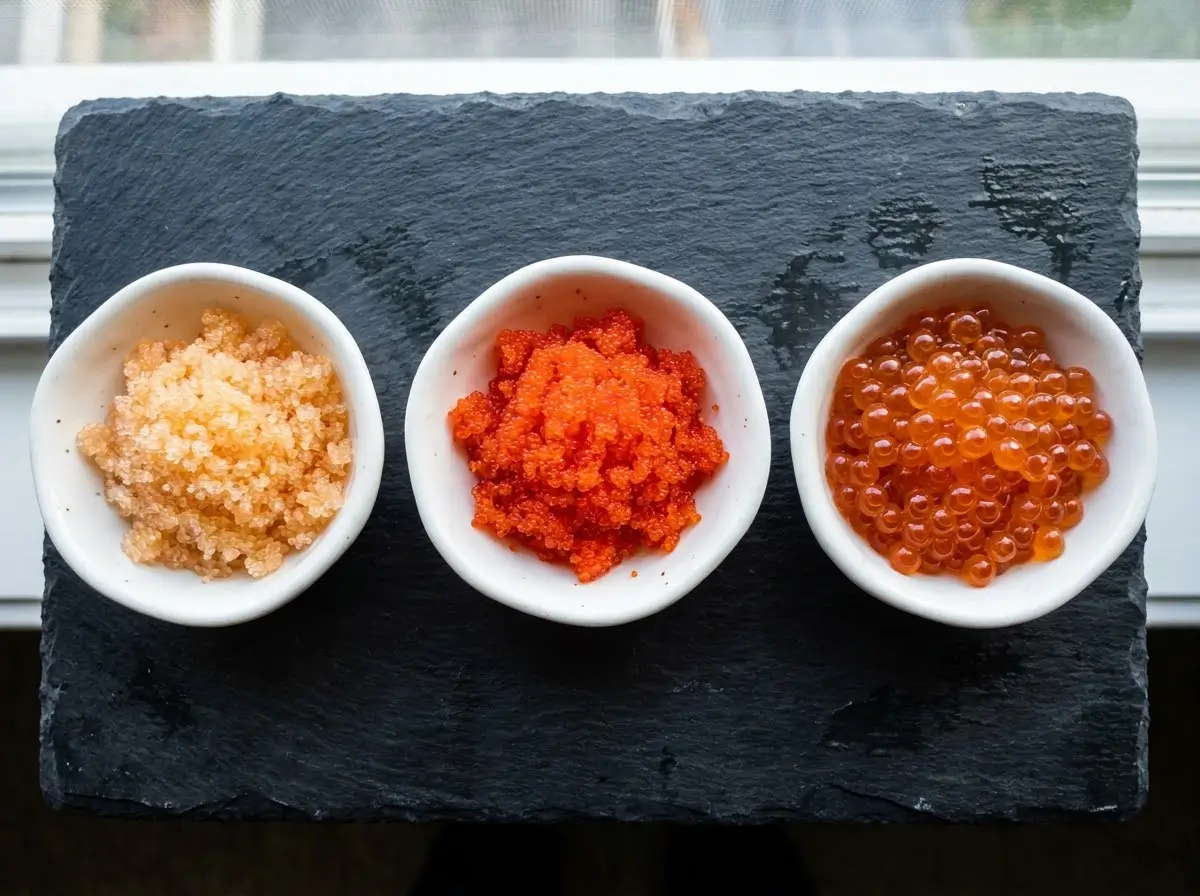
Masago vs Tobiko vs Ikura at a Glance
| Roe | Fish | Size | Natural color | Texture | Flavor | Common use | Price |
|---|---|---|---|---|---|---|---|
| Masago | Capelin (a smelt) | Smallest | Pale yellow to orange | Fine, soft, slight crunch | Mild and lightly briny | Garnish on rolls, sauces, poke | Lowest |
| Tobiko | Flying fish | Small, a bit larger than masago | Reddish-orange | Firm, crunchy | Mild, salty, slightly sweet | California rolls, gunkan, nigiri topping | Middle |
| Ikura | Salmon | Largest, pearl-shaped | Deep orange to red | Soft skin that bursts | Rich and briny | Gunkan, nigiri, rice bowls | Highest |
What Is Masago?
Masago is the roe of capelin, a small fish in the smelt family that lives in the cold North Atlantic and North Pacific. The eggs are the smallest of the three, with a fine, delicate texture and a slight pop. The flavor is mild, a little briny and gently sweet, so masago adds color and texture more than a strong taste.
You will see masago as a topping or filling in rolls like California rolls, spicy tuna rolls and crunchy shrimp rolls. It is also used in masago sauce (a creamy mix with soy sauce or a substitute, rice vinegar, sugar and sometimes mayonnaise), and sprinkled over poke bowls. Because it is the least expensive of the three, restaurants often use it in place of tobiko.
What Is Tobiko?
Tobiko is the roe of flying fish. The eggs are small but a little bigger than masago, with a firm, slightly crunchy bite that holds its shape well. The taste is mild and salty with a touch of sweetness. Naturally, tobiko is reddish-orange, and it is often flavored and colored to make other varieties, according to MasterClass:
- Green tobiko: flavored with wasabi.
- Black tobiko: colored with squid ink.
- Deep red tobiko: colored with beet juice, or flavored with chili for a spicy version.
- Yellow tobiko: flavored with yuzu citrus.
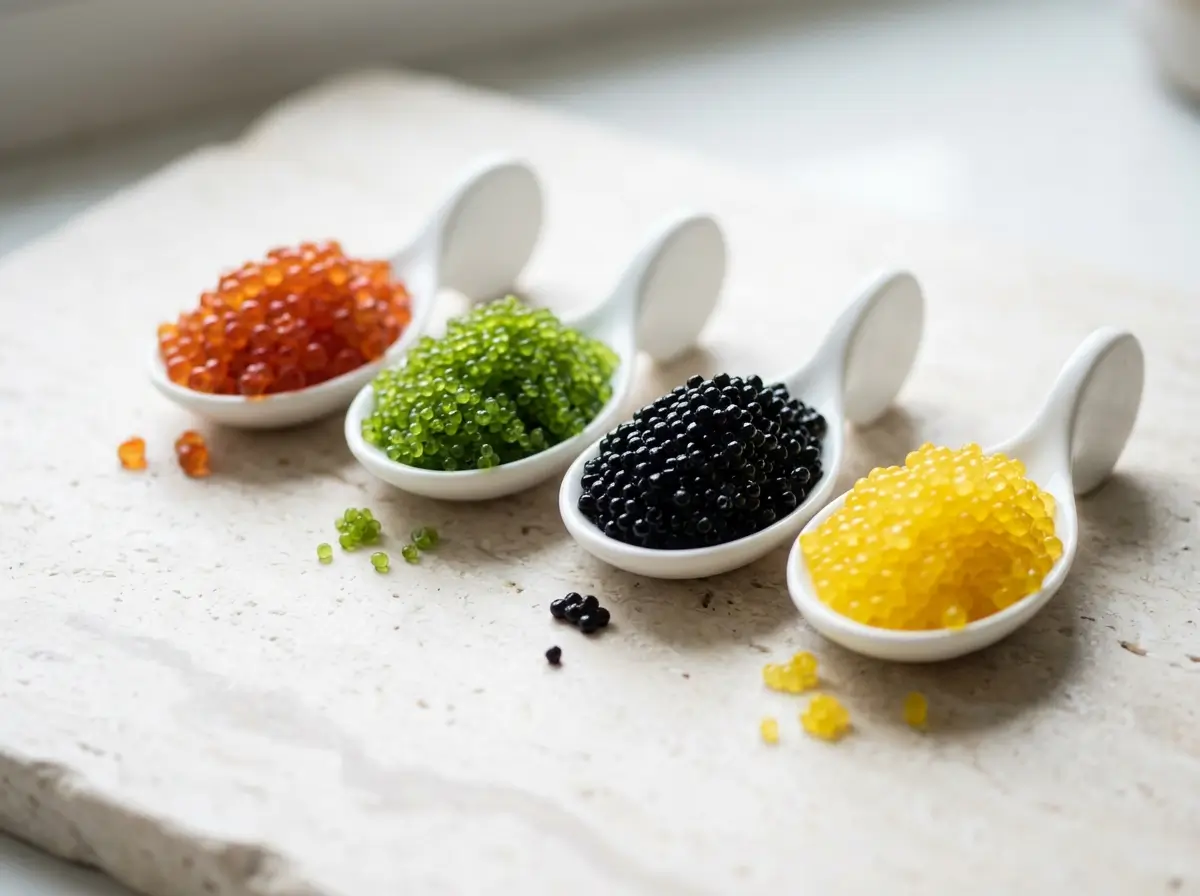
Tobiko is used on top of gunkan sushi, spread on the outside of rolls, or scooped into avocado or cucumber. It is also a crunchy garnish for sauces, dips and salads.
What Is Ikura?
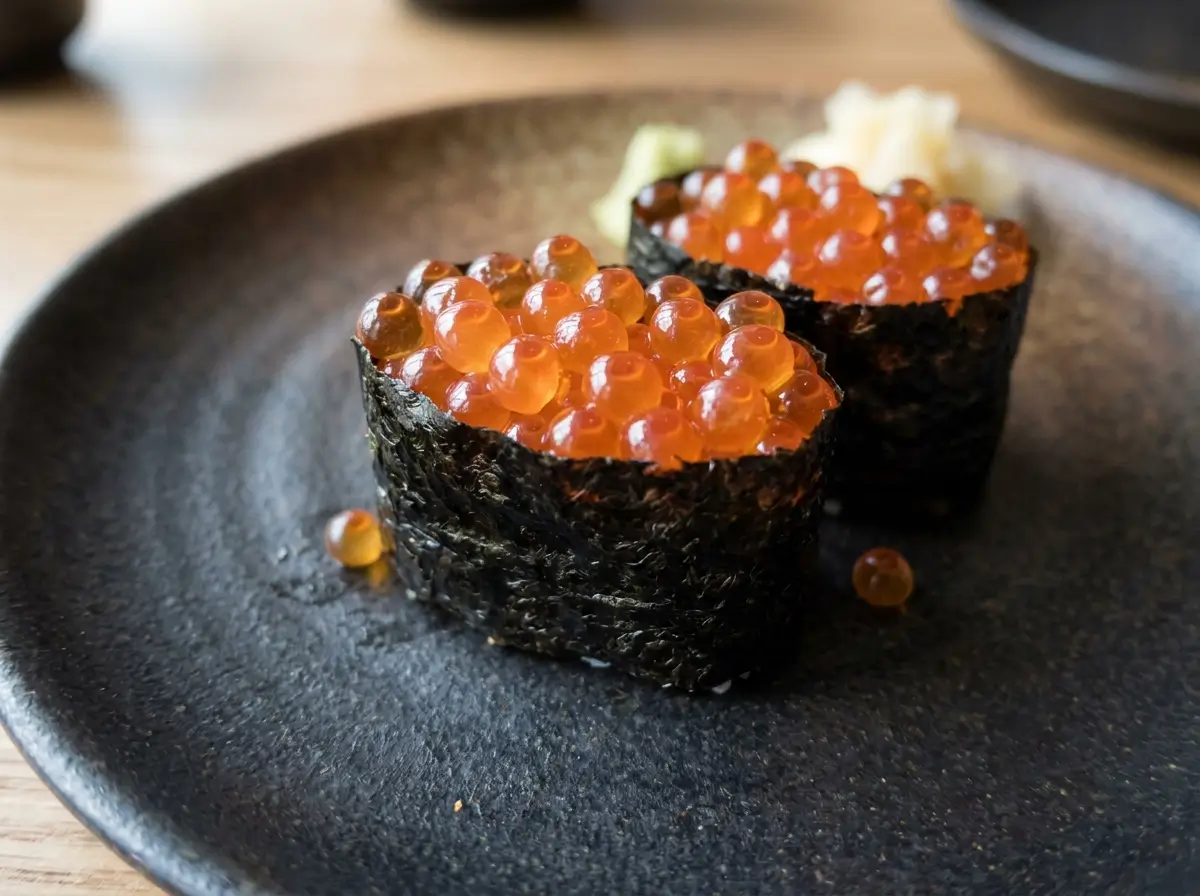
Ikura is salmon roe. The eggs are the largest of the three, shiny, deep orange to red, and each one has a thin skin that bursts in your mouth with a rich, briny flavor. The word ikura comes from the Russian word for roe. In the US it is often called “Japanese caviar,” although true caviar comes from sturgeon.
Ikura is usually served gunkan style, a small oval of rice wrapped in a strip of nori and topped with roe. It also appears on nigiri and over rice in ikura don, a bowl of sushi rice topped with salmon roe.
Masago vs Tobiko: How to Tell Them Apart
- Source: masago comes from capelin, tobiko from flying fish.
- Size: tobiko eggs are slightly bigger than masago eggs.
- Texture: tobiko is crunchier and firmer. Masago is finer and softer.
- Color: masago is paler, from yellow to orange. Natural tobiko is reddish-orange, and the black, green and yellow versions are tobiko.
- Price: masago costs less, which is why it is common in everyday rolls.
If the menu does not say which one you are getting, ask. Both are often listed as “roe” or “fish eggs” on a roll.
Ikura vs Tobiko: What Is the Difference?
Ikura is much bigger and juicier: the eggs burst and release a rich, briny liquid. Tobiko is tiny and crunchy and keeps its shape, even when mixed into sauces. Ikura is served as its own topping, usually in gunkan or on rice. Tobiko works more often as a garnish or a crunchy layer on a roll.
How Roe Is Used in Sushi
- Gunkan maki: a rice oval wrapped in nori and topped with ikura, tobiko or masago. See our guide to maki, nigiri and sashimi for how the formats differ.
- Rolls: tobiko and masago are used inside or outside rolls like California rolls for color and crunch.
- Nigiri and sashimi: roe is a garnish or a topping on top of fish or rice. Not sure how those two differ? Read the difference between sashimi and nigiri and sashimi vs nigiri tips.
- Bowls and sauces: poke bowls, ikura don and creamy masago sauce.
Buying and Storing Fish Roe
Buy roe from a reputable seller and follow the dates and storage directions on the label. Keep it refrigerated in an airtight container so it stays cold and protected from moisture. Roe sold for sushi is eaten raw, so keep it cold from the store to the table.
Frequently Asked Questions
What is masago in sushi?
Masago is the roe of capelin, a small smelt. It is tiny, pale yellow to orange, mild in flavor, and used as a topping or filling in rolls, in sauces, and on poke bowls.
Is masago the same as tobiko?
No. Masago comes from capelin and tobiko from flying fish. Tobiko eggs are slightly larger, crunchier and naturally reddish-orange. Masago is finer, softer, paler and usually less expensive.
Is ikura caviar?
Ikura is salmon roe. It is often called Japanese caviar, but true caviar comes from sturgeon.
Why is tobiko different colors?
Natural tobiko is reddish-orange. Other colors come from added flavorings: wasabi for green, squid ink for black, beet or chili for deep red, and yuzu for yellow.
Which is cheaper, masago, tobiko or ikura?
Masago is usually the least expensive, tobiko is in the middle, and ikura is the most expensive.
Conclusion
Remember the size order: masago is the smallest and softest, tobiko is small and crunchy, and ikura is large and juicy. Check the color and texture, and ask which fish the roe comes from if the menu does not say. For more sushi basics, start with our guide to sushi vs sashimi vs nigiri.