
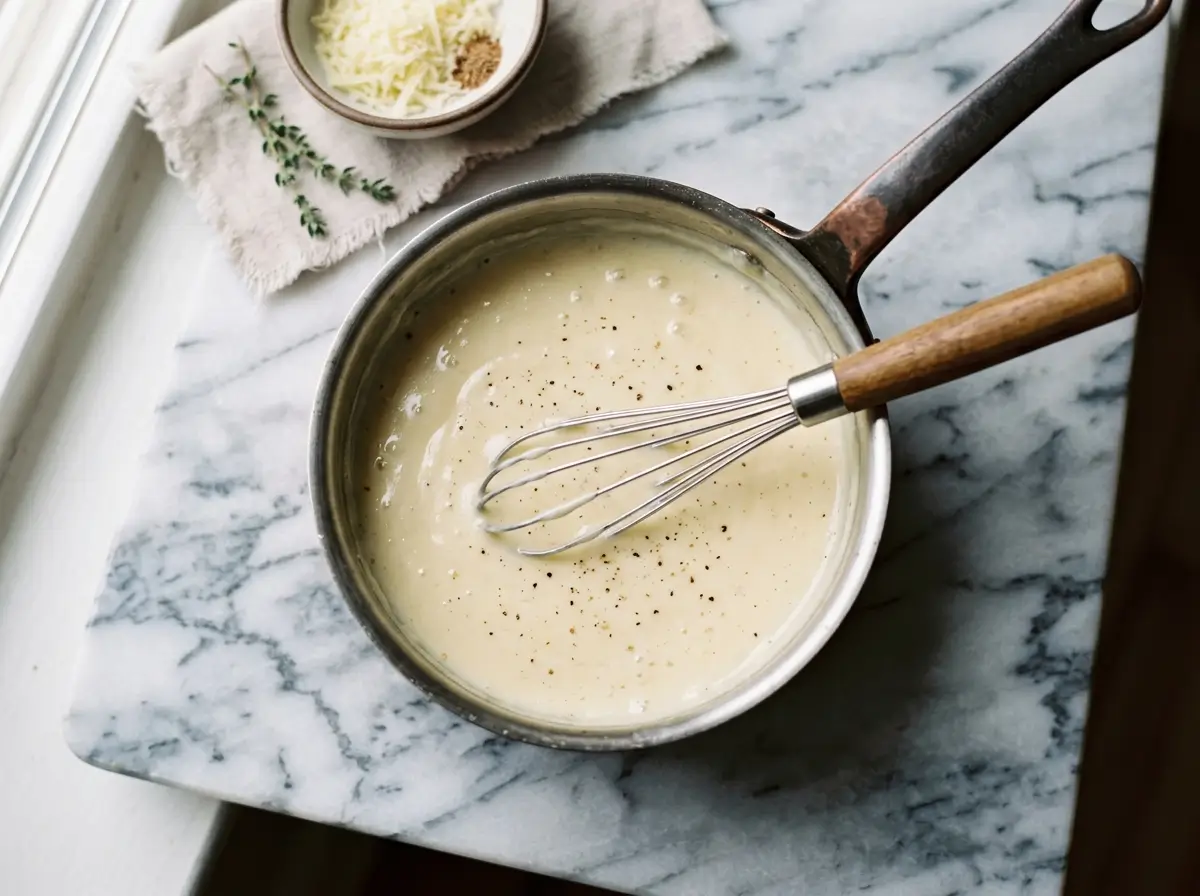
This mornay sauce is the one that turns a plain cauliflower gratin or a weeknight croque monsieur into something that feels like it came out of a French bistro kitchen. It starts with a simple bechamel — butter, flour, milk — and finishes with melted Gruyere and Parmesan stirred in until it’s rich, glossy, and completely irresistible. Fifteen minutes, one saucepan, and a whisk is all it takes.
If you’ve never made a mornay before, don’t let the French name intimidate you. It’s really just a cheese sauce with good technique behind it — and once you’ve made the base bechamel a couple of times, it becomes second nature. Mornay starts life as a bechamel sauce — butter, flour, and milk — with cheese stirred in.
What Is Mornay Sauce?
Mornay sauce is a classic French cheese sauce made by stirring Gruyere and Parmesan into a bechamel base. Bechamel itself is just butter, flour, and milk cooked together into a smooth, creamy sauce — one of the five “mother sauces” of French cuisine codified by chef Auguste Escoffier. Add cheese to that bechamel, and you’ve got mornay: richer, cheesier, and ready to spoon over almost anything.
Why You’ll Love This Mornay Sauce
- Ready in 15 minutes with just one saucepan.
- Only 6 main ingredients, all easy to find.
- Turns simple vegetables, pasta, or eggs into something special.
- A genuinely useful sauce to have in your back pocket — works on more dishes than you’d expect.
- No fancy equipment or technique beyond a whisk and some patience.

Ingredients
- 2 tablespoons unsalted butter
- 2 tablespoons all-purpose flour
- 2 cups whole milk, warmed
- 1/2 cup Gruyere cheese, shredded
- 1/4 cup Parmesan cheese, grated
- 1/4 teaspoon ground nutmeg
- 1/2 teaspoon salt, plus more to taste
- Freshly ground black pepper, to taste
How to Make Mornay Sauce
- Make the roux. Melt the butter in a saucepan over medium heat. Whisk in the flour and cook for 1 to 2 minutes, stirring constantly, until it smells lightly toasted — this is your base bechamel starting.
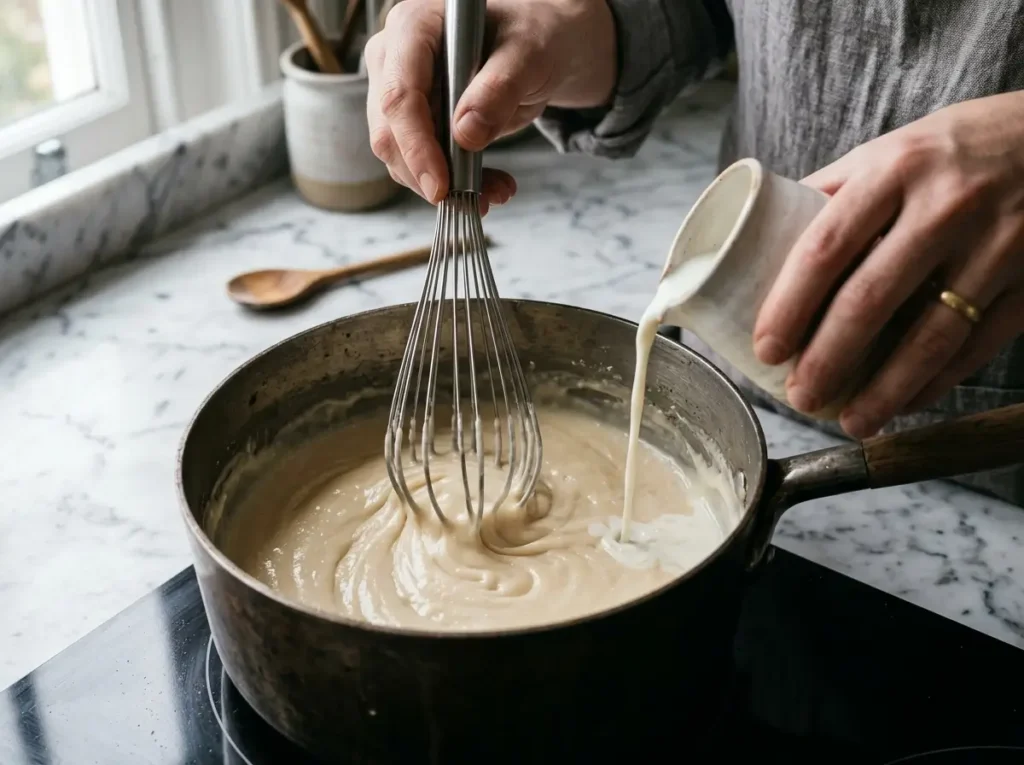
- Add the milk. Slowly whisk in the warmed milk, a little at a time, whisking out any lumps as you go. Continue cooking, whisking often, until the sauce thickens enough to coat the back of a spoon, about 5 to 7 minutes.
- Melt in the cheese. Remove the pan from the heat and stir in the Gruyere and Parmesan until fully melted and smooth. Taking it off the heat first helps keep the sauce silky instead of grainy.
- Season and serve. Stir in the nutmeg, salt, and black pepper. Use it right away while it’s warm and pourable.
Tips for the Best Mornay Sauce
- Warm the milk before adding it to the roux — cold milk added to a hot roux is the most common cause of lumps.
- Always add the cheese off the heat. Cooking cheese over direct heat is what makes sauces turn grainy or oily.
- Gruyere is the traditional choice, but sharp cheddar or a Gruyere-cheddar blend both work well if that’s what you have.
- A small pinch of nutmeg is traditional in mornay and bechamel — it’s subtle, but it rounds out the richness.
What to Serve with Mornay Sauce

- Croque monsieur or croque madame, the classic French application
- Cauliflower or broccoli gratin
- Baked pasta dishes, like a simple mac and cheese upgrade
- Poached or baked eggs
- Spooned over roasted vegetables
If you’re building out a spread of sauces for a dinner party, this pairs beautifully next to my garlic tahini sauce or chimichurri sauce for a table that covers rich, nutty, and bright all at once.
Storage
Mornay sauce is best made fresh and used right away, since it can thicken and slightly separate as it cools. If you have leftovers, store them in an airtight container in the refrigerator for up to 2 days, and reheat gently over low heat, whisking constantly, adding a splash of warm milk to loosen it back up.
Print
Classic Mornay Sauce (Ready in 15 Minutes)
- Total Time: 15 minutes
- Yield: 2 cups 1x
- Diet: Vegetarian
Description
A rich, creamy French mornay sauce made from a bechamel base with Gruyere and Parmesan. Ready in 15 minutes and perfect on pasta, vegetables, or eggs.
Ingredients
- 2 tablespoons unsalted butter
- 2 tablespoons all-purpose flour
- 2 cups whole milk, warmed
- 1/2 cup Gruyere cheese, shredded
- 1/4 cup Parmesan cheese, grated
- 1/4 teaspoon ground nutmeg
- 1/2 teaspoon salt, plus more to taste
- Freshly ground black pepper, to taste
Instructions
- Melt the butter in a saucepan over medium heat.
- Whisk in the flour and cook for 1 to 2 minutes, stirring constantly, until lightly toasted.
- Slowly whisk in the warmed milk, a little at a time, until smooth.
- Continue cooking, whisking often, until the sauce thickens enough to coat the back of a spoon, about 5 to 7 minutes.
- Remove from heat and stir in the Gruyere and Parmesan cheese until fully melted and smooth.
- Season with the nutmeg, salt, and freshly ground black pepper.
- Serve immediately while warm.
Notes
Warm the milk before adding it to prevent lumps. Serve immediately for the smoothest texture.
- Prep Time: 5 minutes
- Cook Time: 10 minutes
- Category: Sauce
- Method: Stovetop
- Cuisine: French
Nutrition
- Serving Size: 1/4 cup
- Calories: 110
- Sugar: 3g
- Sodium: 250mg
- Fat: 8g
- Saturated Fat: 5g
- Unsaturated Fat: 2g
- Trans Fat: 0g
- Carbohydrates: 5g
- Fiber: 0g
- Protein: 5g
- Cholesterol: 25mg
Keywords: mornay sauce, mornay sauce recipe, what is mornay sauce, mornay vs bechamel
Frequently Asked Questions
What is mornay sauce?
Mornay sauce is a classic French cheese sauce made by stirring Gruyere and Parmesan cheese into a bechamel base. It’s rich, creamy, and used to top dishes like gratins, pasta, eggs, and croque monsieur.
What is the difference between mornay sauce and bechamel?
Bechamel is the plain base sauce made from butter, flour, and milk. Mornay sauce is bechamel with cheese stirred in at the end. Every mornay starts as a bechamel, but not every bechamel becomes a mornay.
What cheese is traditionally used in mornay sauce?
Traditional mornay uses Gruyere cheese, sometimes with a little Parmesan added for extra depth. Gruyere melts smoothly and has a nutty flavor that keeps the sauce silky rather than grainy or greasy.
What do you use mornay sauce for?
It’s classic on croque monsieur and croque madame, cauliflower or vegetable gratins, baked pasta dishes, and eggs. It’s also the traditional topping for the Hot Brown, a Kentucky open-faced sandwich.
Why did my mornay sauce turn out grainy?
This usually happens when the cheese is added over heat that’s too high, or all at once. Remove the pan from the heat before stirring in the cheese, and add it gradually so it melts smoothly instead of separating.
Can you make mornay sauce ahead of time?
It’s best made fresh, since it can thicken and separate slightly as it cools. If you do make it ahead, reheat it gently over low heat, whisking constantly, and add a splash of warm milk to loosen it back up.