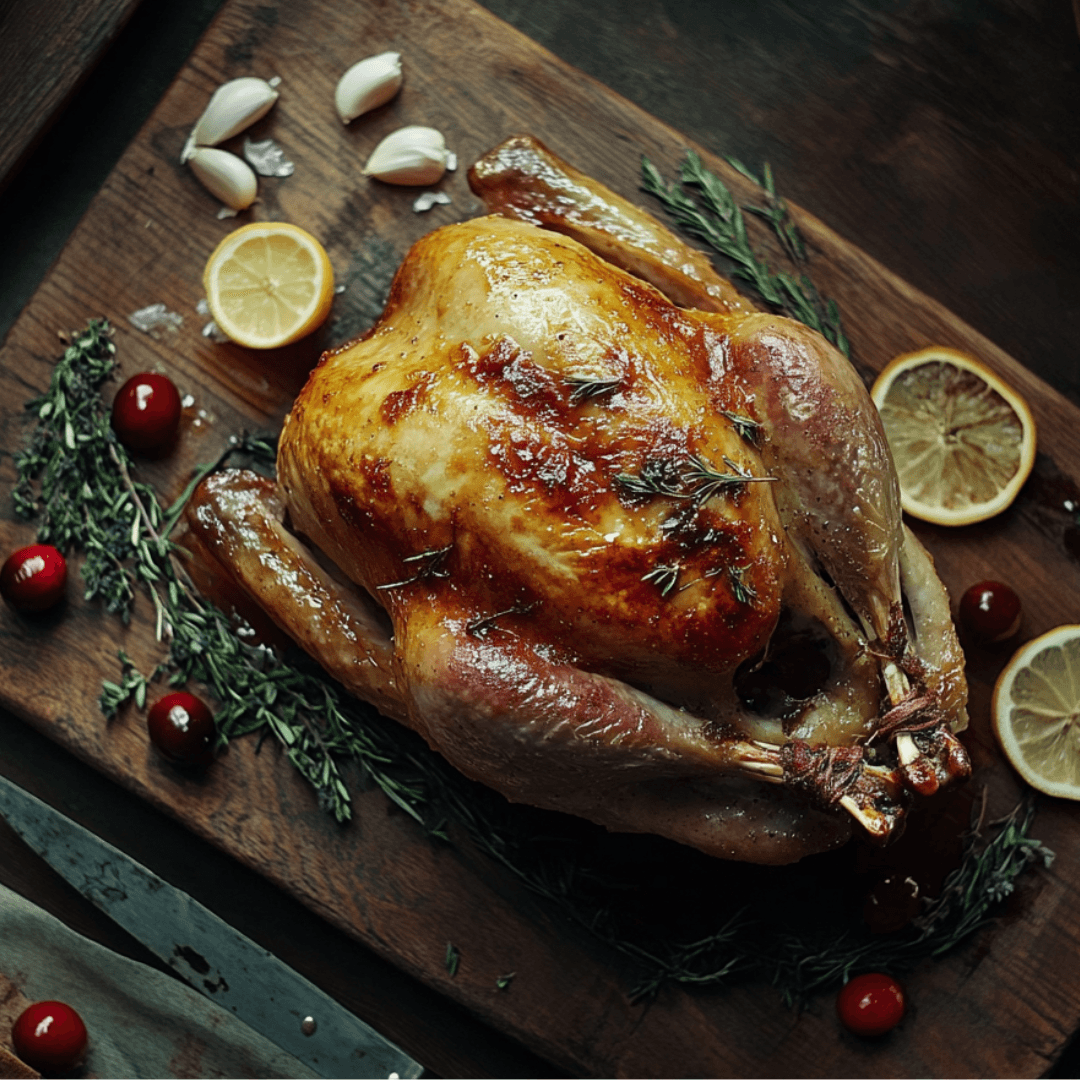
Wild turkey is leaner, darker and more flavorful than a supermarket bird, and it needs a different approach in the kitchen. This guide covers how to roast, grill, fry and brine wild turkey, with a roasted turkey breast for smaller tables and a few side dishes to go with it. The main rule: wild turkey has little fat, so brine it, cook it with a thermometer, and rest it before slicing.
Wild Turkey vs. Farm-Raised Turkey
- Flavor: richer and slightly gamey, with a deeper turkey taste than most store-bought birds.
- Leanness: wild birds carry less fat, so the breast dries out faster. Brining, basting and careful timing matter more.
- Size and texture: wild turkeys are often smaller than farm birds, and the legs are tougher with more tendons, so many cooks braise the legs and roast the breast.
- Nutrition: turkey is a good source of protein, iron, zinc and B vitamins. Exact numbers vary by bird, so check a database such as USDA FoodData Central.
Four Rules for Cooking Wild Turkey
1. Brine or marinate
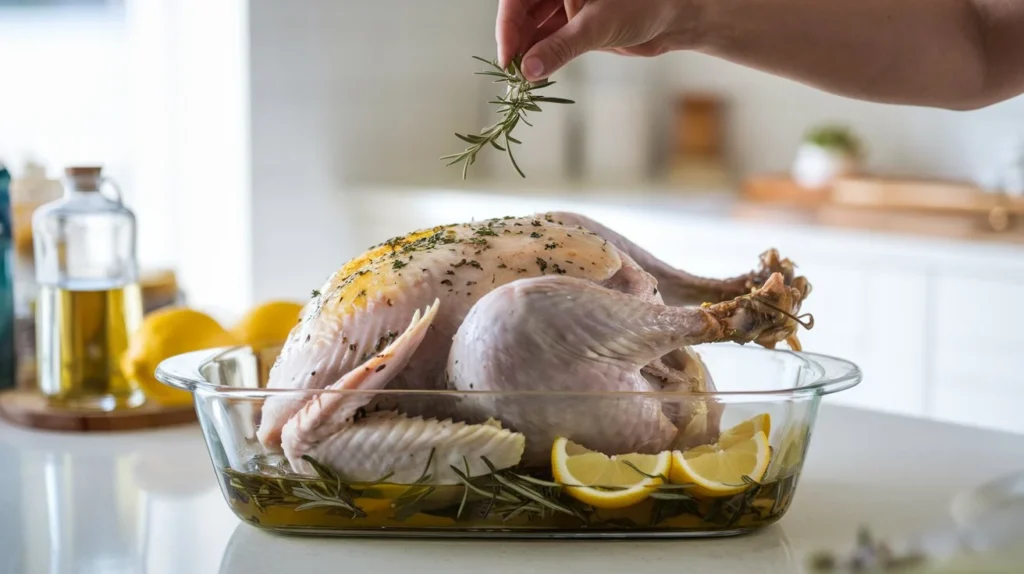
Soak the bird for 8 to 12 hours in a simple brine of 1/2 cup salt and 1/4 cup sugar per gallon of cold water, or marinate it in olive oil, garlic, lemon, thyme and rosemary. Keep it in the refrigerator the whole time, and rinse and pat dry before cooking.
2. Cook low and slow, then finish hot
Roast at 325°F (163°C) and baste every 30 minutes. For crisp skin, raise the oven to 425°F (220°C) for the last 15 to 20 minutes.
3. Use a thermometer
Poultry is safe at an internal temperature of 165°F (74°C), according to the FDA safe minimum cooking temperatures. Check the thickest part of the breast and the thigh. Because wild turkey is lean, pull it as soon as it hits that number.
4. Rest before carving
Tent the turkey with foil and rest it 20 to 30 minutes (10 minutes for a breast) so the juices settle.
Keep the seasoning simple: salt, pepper, garlic, sage, thyme, rosemary, and lemon or orange.
Wild Turkey Recipes to Try
Roast Wild Turkey
Season the brined bird with salt, pepper and herbs, and stuff the cavity with garlic, onion and lemon wedges. Roast at 325°F, basting often, until the thickest part of the thigh and breast reach 165°F. Smaller wild birds can cook faster than you expect, so start checking early.
Grilled Wild Turkey
Spatchcock the turkey by cutting out the backbone and flattening the bird so it cooks evenly. Rub it with olive oil, garlic, paprika, salt and pepper. Grill it over indirect medium heat (about 325°F) with the lid closed until it reaches 165°F, turning occasionally. Timing depends on size, so use the thermometer rather than the clock.
Wild Turkey Schnitzel
Slice the breast into cutlets and pound them thin. Dredge in flour, then beaten egg, then panko, and fry in hot oil until golden and cooked through. Serve with lemon and mashed potatoes or coleslaw.
Sourdough Herb Stuffing
Toss cubed sourdough with sautéed onion and celery, sage, thyme and rosemary, then add chicken or turkey stock and a handful of chopped cranberries. Bake in a separate dish until golden and hot in the center. Stuffing cooked inside the bird must also reach 165°F.
How to Roast a Wild Turkey Breast
A bone-in or boneless breast is the easiest way to start, and it feeds a smaller table.
- Marinate: coat the breast in olive oil, minced garlic, lemon zest, thyme and rosemary. Refrigerate for at least 2 hours, or overnight.
- Roast: heat the oven to 325°F (163°C). Set the breast on a rack in a roasting pan and baste every 30 minutes until it reaches 165°F (74°C) in the thickest part.
- Rest and slice: rest 10 minutes, then slice thinly against the grain.
Fried Wild Turkey Pieces
- Prep: cut the meat into cutlets or small pieces, pat dry and season with salt, pepper, garlic powder and a pinch of cayenne.
- Bread: dredge in flour, dip in beaten egg and coat with panko.
- Fry: heat oil to 350°F (175°C) and fry in small batches, 3 to 5 minutes per side, until golden and 165°F inside. Do not crowd the pan, or the oil temperature drops and the coating turns soggy.
- Serve: drain on a rack and serve with ranch or barbecue sauce.

What to Serve With Wild Turkey
- Potatoes: our creamiest mashed potatoes soak up the pan juices.
- Casserole: the classic green bean casserole.
- More sides: browse 50+ ideas in our Thanksgiving side dishes list. Roasted carrots, Brussels sprouts and sweet potatoes also pair well with the richer, gamey flavor.
- Dessert: finish with apple, pumpkin or pecan pie, or pick something from our best apple recipes.
FAQs
What is the best way to cook a wild turkey?
Brine the bird, roast it at 325°F (163°C) with regular basting, and pull it as soon as the thickest part reaches 165°F (74°C). Grilling a spatchcocked bird over indirect heat and frying cutlets are good alternatives.
Should you soak wild turkey before cooking?
Yes. Wild turkey is lean and dries out easily, so an 8 to 12 hour brine in the refrigerator helps it hold moisture. A marinade with oil, citrus and herbs also works.
Why is wild turkey tougher than store-bought turkey?
Wild birds are more active and carry less fat, so the legs in particular have more connective tissue. Braise the legs and thighs, and roast or fry the breast.
What can you make with wild turkey?
Roast the whole bird or just the breast, grill a spatchcocked turkey, fry cutlets for schnitzel, or simmer the leftover meat and carcass into soup and stock.
Final Thoughts
Brine it, watch the thermometer and rest it before carving, and wild turkey makes a rich, memorable Thanksgiving centerpiece. For the rest of the menu, start with our Thanksgiving side dishes.