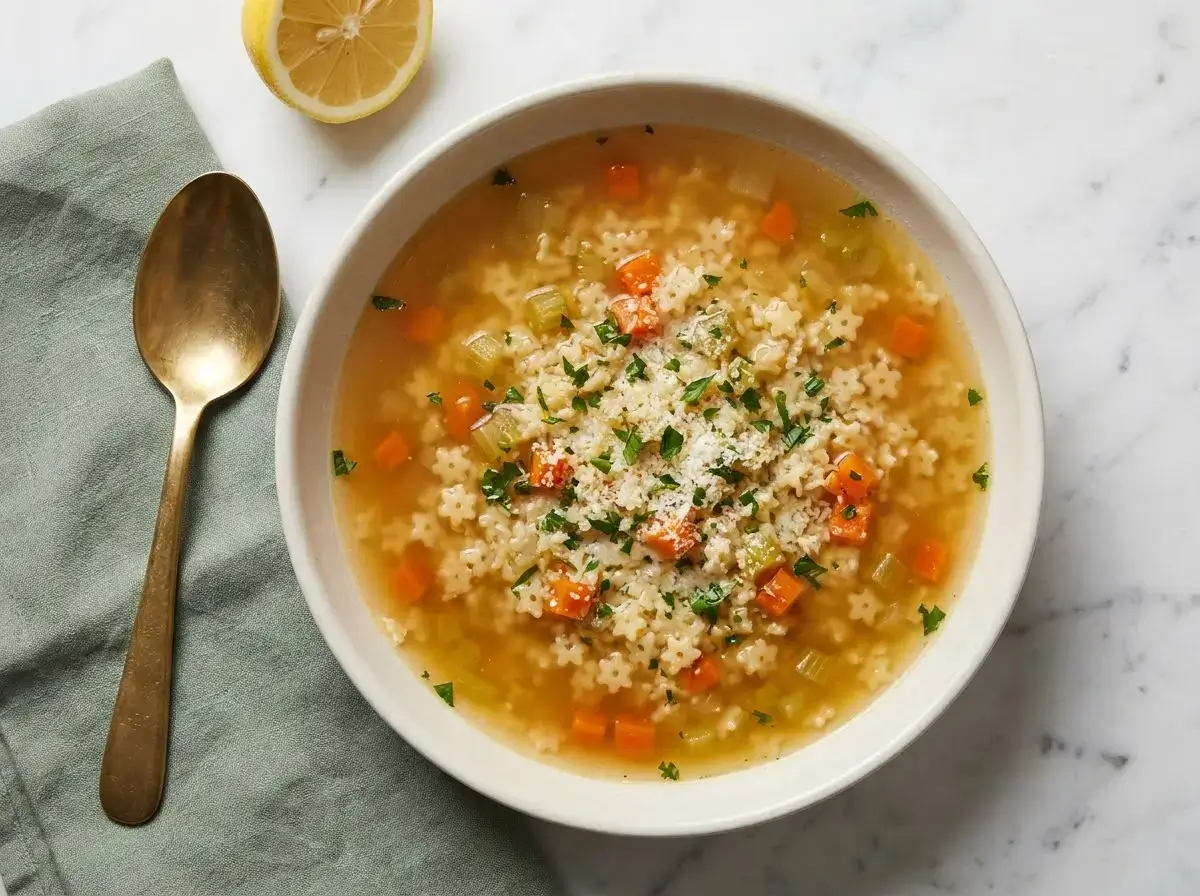
The first time I made this soup I expected something plain. Broth, three vegetables, pasta the size of a grain of rice. What came out of the pot is now the bowl I make whenever someone in this house is cold, tired, or sulking about the weather. Italians call it penicillin, which tells you much more about how it feels than about what it does.
It takes about 40 minutes and one pot, and the only real decision is whether you want it brothy with soft little vegetables, or blended into something silky. I make both. Below is how to pick, and the handful of details that decide whether the pasta stays tender or turns the whole thing into porridge.
What Italian Penicillin Soup Actually Is
“Italian penicillin” is an affectionate nickname for a brothy Italian soup built on good stock, soft vegetables and tiny pasta. It is a term of endearment, not a medical claim: this is a comforting bowl of soup, and it does not treat or cure an infection. If someone is unwell enough to need treatment, that is a conversation for their doctor.
Pastina is not one shape. The word covers any very small pasta, and stelline, the little stars, are the classic choice. That is the whole trick of the soup: pasta small enough that you eat it with a spoon rather than a fork, suspended in broth that actually tastes of something.
Brothy or Blended: Decide Before You Start
This is the one choice that changes the soup, and it is worth making before the pot goes on the heat. Both versions use the same ingredients in the same amounts.
| Version | What you get | Make it this way |
|---|---|---|
| Brothy the classic chicken pastina soup | Clear golden broth with small soft pieces of carrot, celery and onion, pasta throughout. Looks like the soup most people picture. | Dice the vegetables small from the start, about a quarter inch, and skip the blender entirely. |
| Blended the silky version | A thicker orange broth that coats the spoon, no visible vegetables, body without any cream. | Cut the vegetables however you like, cook until completely soft, then blend before the pasta goes in. |
If you are feeding someone who picks vegetables out of their bowl, blend it. If you want the soup to look like the one a nonna hands you, keep it brothy. Either way it should still pour easily when you serve it.
What Actually Matters in the Ingredients
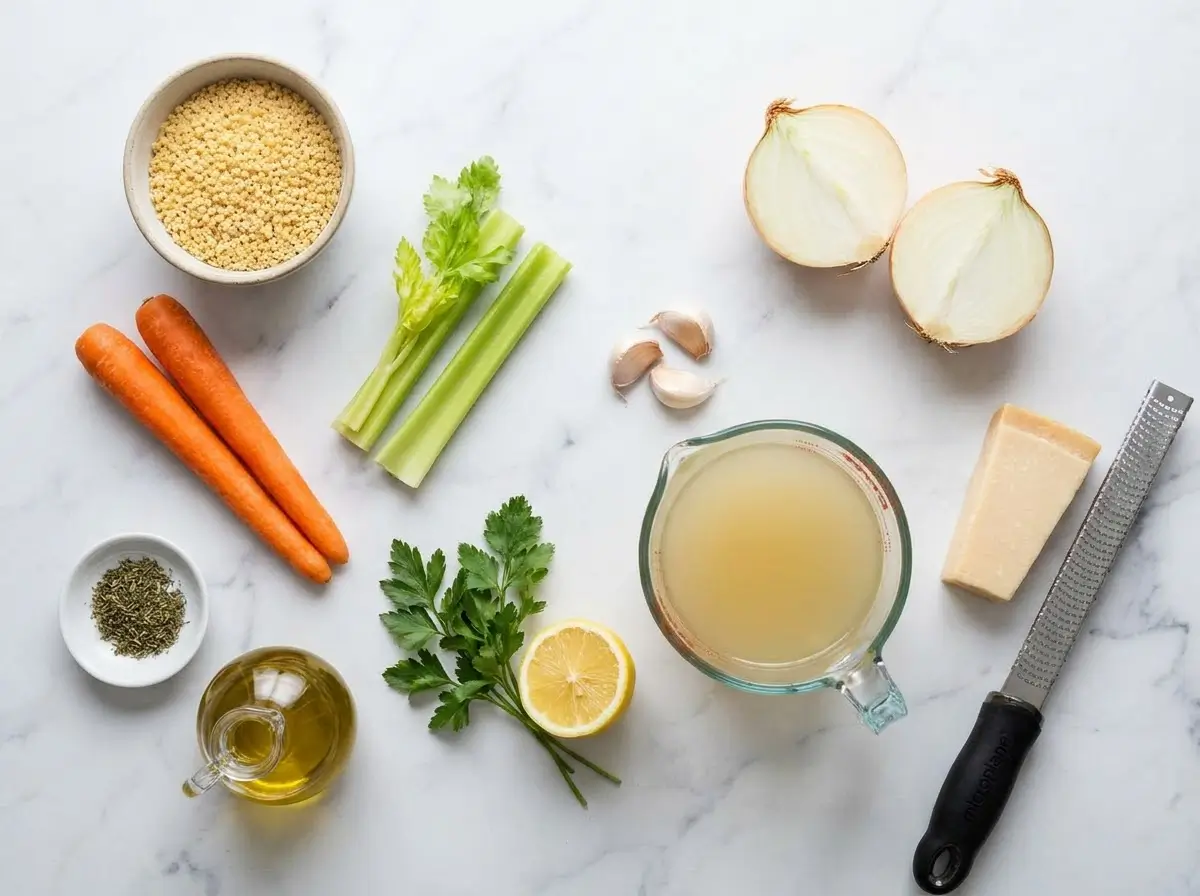
The broth carries everything. Taste it on its own before you cook with it. If you would not happily drink a small cup of it, the soup will not fix that. Dilute concentrated bouillon to label strength before you measure the six cups, and dilute homemade stock that has set to jelly until it tastes like something you would sip.
The vegetable ratio is not arbitrary. Stick close to the cup amounts if your carrots and celery are unusually large. Too much celery takes over a mild broth. More carrot makes the soup sweeter and a deeper orange, which is lovely in the blended version and a little odd in the brothy one.
Grate the Parmesan finely and add it off the heat. Thick shreds sink and clump. Fine gratings melt into the broth. Cheese also brings its own salt, which is why the salt in the recipe is listed last and marked optional.
Lemon brightens, it does not flavor. Start with the tablespoon. Let a spoonful cool before you judge it, because hot soup hides acid. You want the broth to taste awake, not lemony.
Choosing the Pasta
| Shape | How it behaves |
|---|---|
| Stelline (tiny stars) | The classic. Delicate, almost dissolves into the broth. Start checking at the earliest time on the package. |
| Acini di pepe | Small round beads with a bit more bite. Stir often, they settle fast. |
| Orzo | Rice-shaped and much more noticeable on the spoon. Use the same dry weight and its own timing. |
Weigh it if you can. Four ounces is the reference, and different shapes fill a cup very differently. Whatever you do, resist adding extra dry pasta because the pot looks too brothy at the start. It swells as it cooks and keeps swelling in the bowl.
The Three Things That Decide the Texture
Everything else in the method is just simmering. These three are where soups go wrong.
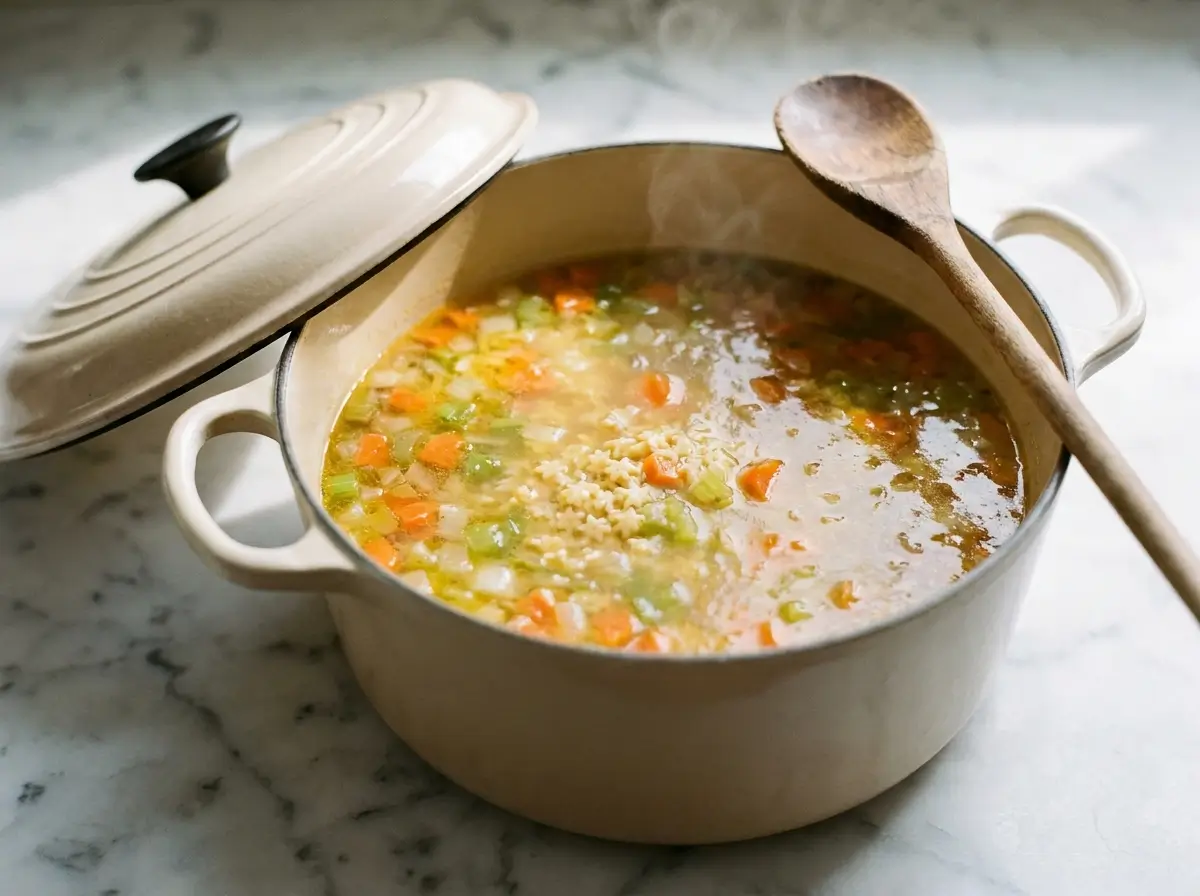
- Get the carrots genuinely soft before blending. A piece should crush against the side of the pot under a spoon with no resistance. Firm carrot leaves a grainy base that no amount of blending repairs.
- Keep the simmer gentle once the pasta is in, and stir the bottom. Tiny shapes sink and catch, especially in a thickened vegetable base. A hard boil tears them apart.
- Stop while the pasta is only just tender. It keeps drinking broth in the bowl on the way to the table. Soup that was perfect in the pot can be stiff five minutes later.
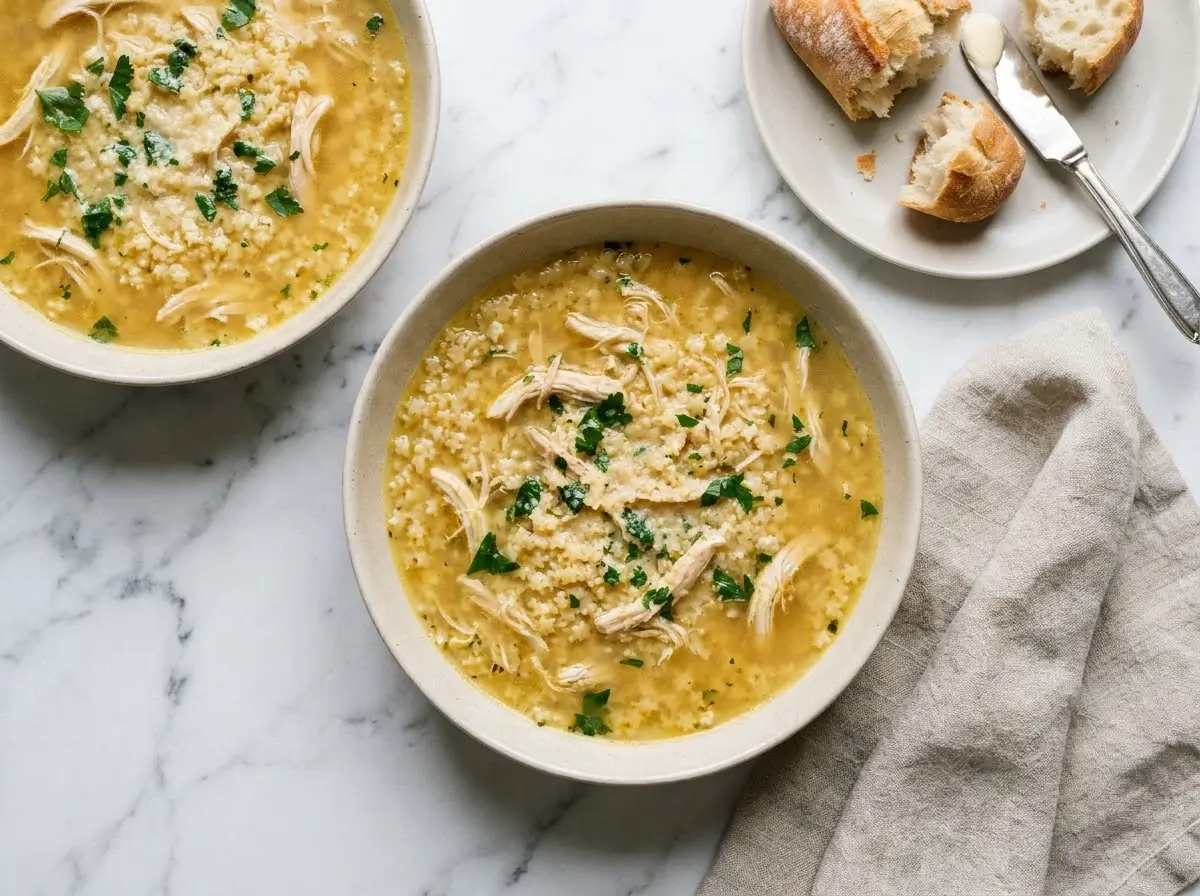
Making It a Full Meal: The Chicken Version
The base recipe uses chicken broth but no meat. For a proper chicken pastina soup, stir in 1½ cups of cooked shredded chicken, about 7 ounces, during the last few minutes of the pasta’s cooking time and heat it through to 165°F. Skinless breast adds roughly 80 calories and 15 grams of protein per serving.
This is the best possible use for a carcass you already picked over — my leftover rotisserie chicken recipes has more ideas if you have a lot of it. Use cooked chicken, not raw: cook it separately to 165°F, shred it, then add the measured amount. Never blend chicken with the vegetables.
Other Variations
- Vegetarian: vegetable broth, and a Parmesan-style cheese made without animal rennet.
- Dairy-free: leave out the Parmesan and finish with the lemon plus an extra teaspoon of olive oil for the whole pot.
- Gluten-free: certified gluten-free small pasta, and check the broth label. Cook the pasta separately if its starch clouds the broth.
- With greens: two cups of baby spinach in the last minute or two. Add it after blending, not before, or the whole soup turns green.
- With beans: a cup of drained cannellini near the end. Mash a few into the broth for body. Keep extra broth nearby, since beans take up room.
If Something Went Wrong
The base feels grainy. If the pasta is not in yet, simmer a few more minutes and blend again. Once pasta is in the pot, do not blend the whole soup — you will shred the pasta along with it.
The broth tastes flat. Let a spoonful cool, then add salt in small pinches and taste again before you reach for more lemon. Acid cannot stand in for salt, and salt cannot stand in for freshness. Change one at a time or you will never know which worked.
The cheese clumped. The soup was still boiling when it went in, or it went in all at once. Take the pot off the heat and sprinkle it gradually while stirring. A few clumps do not ruin anything.
It turned into pasta instead of soup. That is the pastina doing what pastina does. Stir in warm broth or water a quarter cup at a time until it flows again. Water is the better choice if the seasoning is already strong.
Make Ahead, Store, Reheat
The one rule worth following: keep cooked pasta out of the base if you are not eating it all now. Make the vegetable base, divide it, and cook pasta only into the portion you are about to serve. For two servings now and two later, cook 2 ounces of dry pastina in half the base and keep the rest plain.
Get leftovers into shallow containers in the refrigerator within two hours, or one hour if the kitchen is above 90°F, and eat them within three to four days. Reheat to 165°F. The base freezes well for up to three months without pasta; thaw it overnight in the refrigerator and cook fresh pastina into it. Those timings follow Mayo Clinic’s guidance on keeping leftovers safely.
If you already mixed everything together, keep it anyway. Expect softer pasta and add liquid when you reheat. There is no need to fish the pasta out.
What to Serve With It
Toast for dipping and a sharp green salad are all it really needs. Add the chicken and it is dinner on its own. If you are building an Italian soup night, my lasagna soup is the heavier counterpart, and the sausage and tortellini soup is the one I make when the table is full. For broth-first bowls from elsewhere, there is caldo de pollo and old fashioned chicken and dumplings. A cold Italian pasta salad alongside works better than it sounds.
Keep the pot mild and put the Parmesan, pepper, lemon and chicken on the table separately. Everyone finishes their own bowl, and you stir the pot between ladles so the last serving is not all pasta.
Frequently Asked Questions
Is Italian penicillin soup actually medicinal?
No. The name is affection, not medicine. It is a warm, salty, easy-to-eat bowl of soup, which is why people reach for it when they feel rough. It does not treat an infection, and it is not a substitute for medical care.
Can I make it without a blender?
Yes, and that is the classic version. Dice the vegetables small before cooking and leave them in. Same flavor, chunkier spoonful.
Is orzo the same as pastina?
Not quite. Pastina means any very small pasta; orzo is a specific rice-shaped one. Orzo works here: use the same four ounces by weight and follow its own cooking time, and expect a more substantial bite.
Why did my soup turn thick overnight?
Pastina keeps absorbing broth long after the heat is off. Add liquid when you reheat, and next time store the pasta separately from the base.
Can I halve the recipe?
Yes. Halve everything and use a smaller pot so the broth does not boil away. Judge the vegetables by tenderness rather than the clock, and follow the pasta package.
Can I use rotisserie chicken?
That is the easiest route. Shred 1 1/2 cups of the cooked meat and stir it in during the last few minutes, heated through to 165°F.
Italian Penicillin Soup
- Total Time: 50 minutes
- Yield: 4 servings, about 1 3/4 cups each 1x
Description
Tiny pastina in a golden broth of carrot, celery and onion, finished with lemon and Parmesan. Brothy or blended, with an easy chicken variation.
Ingredients
- 1 tablespoon olive oil
- 1 medium yellow onion, diced (about 1 cup)
- 2 medium carrots, peeled and cut into 1/2-inch pieces (about 1 cup)
- 2 celery stalks, sliced (about 3/4 cup)
- 3 garlic cloves, minced
- 6 cups low-sodium chicken broth
- 1/2 teaspoon dried thyme
- 1/4 teaspoon freshly ground black pepper
- 3/4 cup dry pastina, such as stelline (about 4 ounces; use the weight if your pasta packs differently)
- 1/4 cup finely grated Parmesan (about 3/4 ounce)
- 1 tablespoon fresh lemon juice, plus more to taste
- 2 tablespoons chopped fresh parsley
- Up to 1/4 teaspoon fine salt, only as needed
Instructions
- Soften the vegetables. Heat the oil over medium heat. Add the onion, carrots and celery and cook 6 minutes, stirring regularly. Add the garlic and stir 30 seconds without letting it brown. For the brothy version, dice everything to about 1/4 inch first.
- Simmer until tender. Add the broth, thyme and pepper. Bring to a gentle boil, lower the heat and partially cover. Simmer 15 to 18 minutes, until a carrot piece crushes easily against the pot with a spoon.
- Blend, or skip. For the silky version, take the pot off the heat and blend smooth with an immersion blender kept fully submerged. With a countertop blender, work in small batches and vent the steam; never seal hot soup in a personal blender cup. For the brothy version, leave the vegetables whole and go straight to the next step.
- Cook the pasta. Return to a gentle simmer. Stir in the pastina and cook uncovered to the package time, usually 5 to 8 minutes. Stir often and scrape the bottom. Add a splash of water if it tightens.
- Finish. Turn off the heat. Stir in the Parmesan, lemon juice and parsley. Taste, then add salt only if it needs it. Serve while the pastina still has some texture.
Notes
Chicken: stir in 1 1/2 cups cooked shredded chicken (about 7 ounces) during the last few minutes of pasta cooking and heat to 165°F. Adds roughly 80 calories and 15 g protein per serving with skinless breast.
Vegetarian: vegetable broth and a Parmesan-style cheese made without animal rennet. Dairy-free: omit the Parmesan and finish with lemon plus an extra teaspoon of olive oil for the whole pot. Gluten-free: certified gluten-free small pasta, and check the broth label.
Make ahead: refrigerate the base and the cooked pasta separately, in shallow containers, within 2 hours. Use within 3 to 4 days and reheat to 165°F. Freeze the base without pasta for up to 3 months.
- Prep Time: 15 minutes
- Cook Time: 35 minutes
- Category: Soup
- Method: Stovetop
- Cuisine: Italian
Nutrition
- Serving Size: 1 3/4 cups
Keywords: italian penicillin soup, penicillin soup, italian penicillin, chicken pastina soup, pastina soup, italian chicken soup
Soft vegetables, a broth worth drinking on its own, and pasta pulled off the heat a minute early. That is the whole soup. Make the base when you have time, and cook the pastina into it when you are ready to eat.