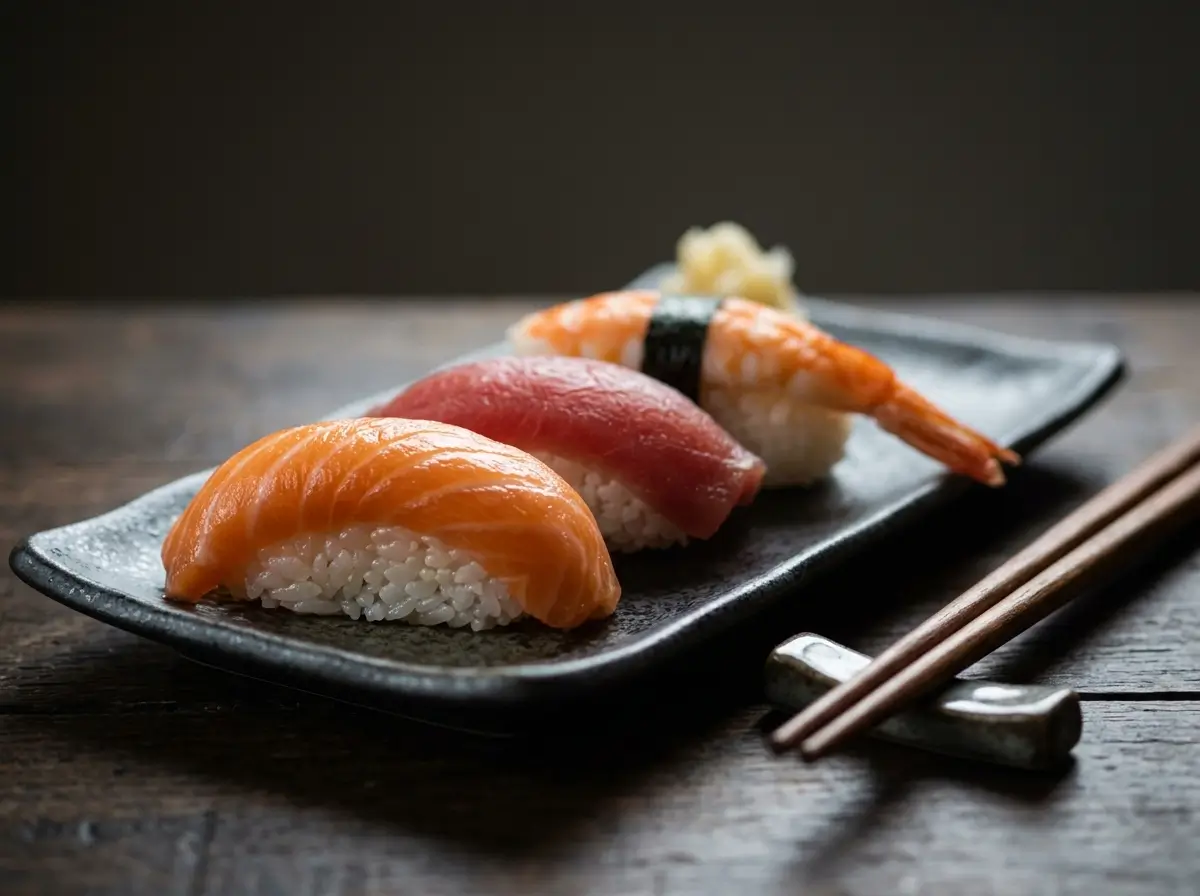
The short answer: sushi is anything built on vinegared rice, sashimi is sliced raw fish served without rice, and nigiri is a type of sushi: a small hand-pressed mound of rice topped with a slice of fish. So all nigiri is sushi, but sashimi is not sushi at all.
That is the whole puzzle. Most menus mix the three words together, which is why it is easy to order sashimi when you wanted rice. Here is how to tell them apart at a glance, and how to eat each one the right way.
Sushi vs Sashimi vs Nigiri at a Glance
| Feature | Sushi | Sashimi | Nigiri |
|---|---|---|---|
| What it is | Vinegared rice with other ingredients | Thinly sliced fish or seafood | Fish pressed onto a small mound of rice |
| Rice | Always | Never | Always |
| Raw fish | Sometimes | Almost always | Often (can be cooked) |
| How you eat it | Chopsticks or hands | Chopsticks | Hands or chopsticks |
| Common examples | Maki rolls, hand rolls, chirashi | Salmon, tuna or yellowtail slices | Salmon, tuna or shrimp nigiri |
What Is Sushi?
Sushi is defined by the rice, not the fish. The rice is seasoned with vinegar, and it can be paired with raw fish, cooked fish, egg, or vegetables. That is why a cucumber roll and an avocado roll are both sushi, and why many sushi dishes contain no raw fish at all.
Sushi comes in several forms: maki (rolled in seaweed), hand rolls, nigiri, and chirashi (a bowl of rice topped with fish and vegetables). If you like the crispy, modern style, my guide to a sushi order topped with salmon shows how crispy rice and avocado fit in.
What Is Sashimi?
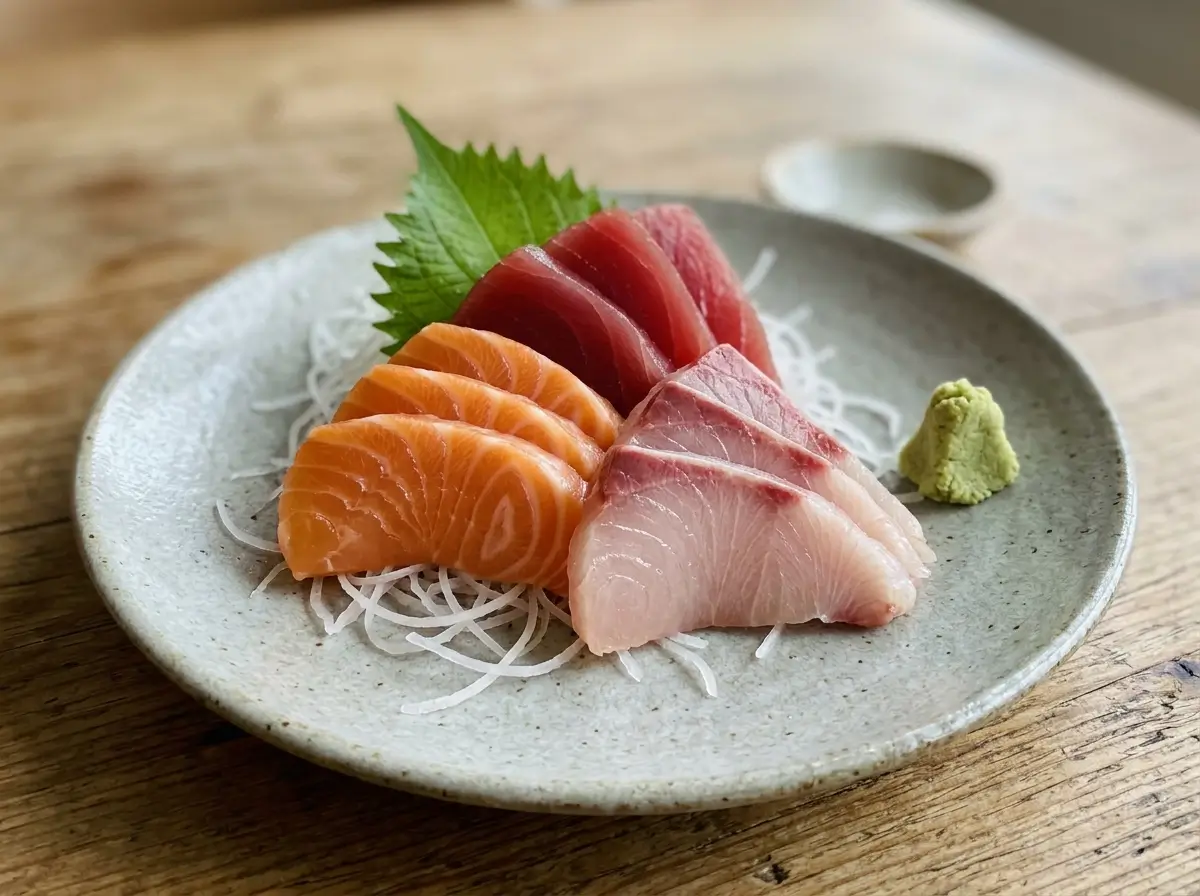
Sashimi is the fish on its own: thin, clean slices of raw salmon, tuna, yellowtail or another seafood, served with soy sauce, wasabi and sometimes shredded daikon. There is no rice, so the texture and freshness of the fish are the whole point. Because of that, quality matters more with sashimi than with any other style. For safe handling and serving, see the FDA’s guide to selecting and serving fresh and frozen seafood safely.
What Is Nigiri?
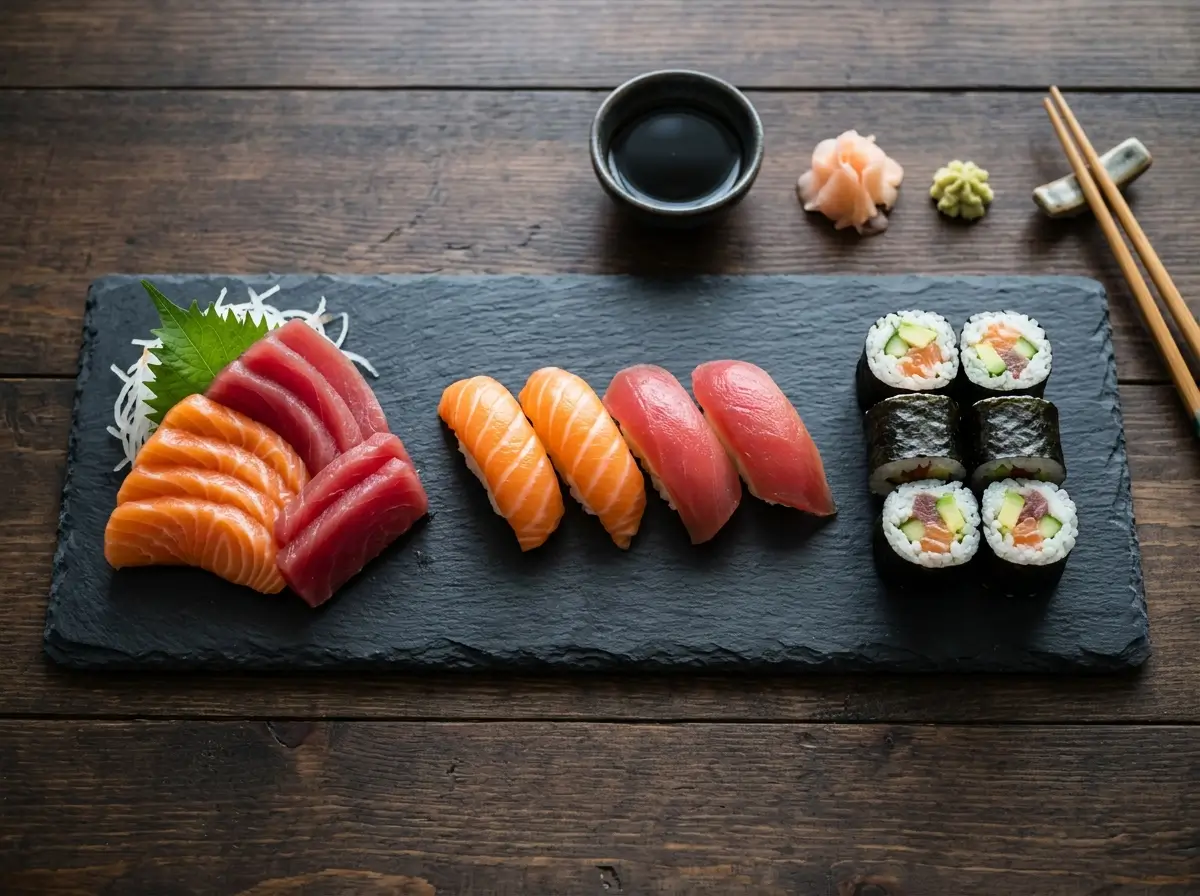
Nigiri is a small oval of seasoned rice, pressed by hand, with a slice of fish on top. Sometimes a thin strip of seaweed holds the topping in place, as with eel or egg. The fish can be raw, like salmon or tuna, or cooked, like shrimp or eel. For a closer look, read my full guide to the difference between sashimi and nigiri.
How to Eat Sushi Properly
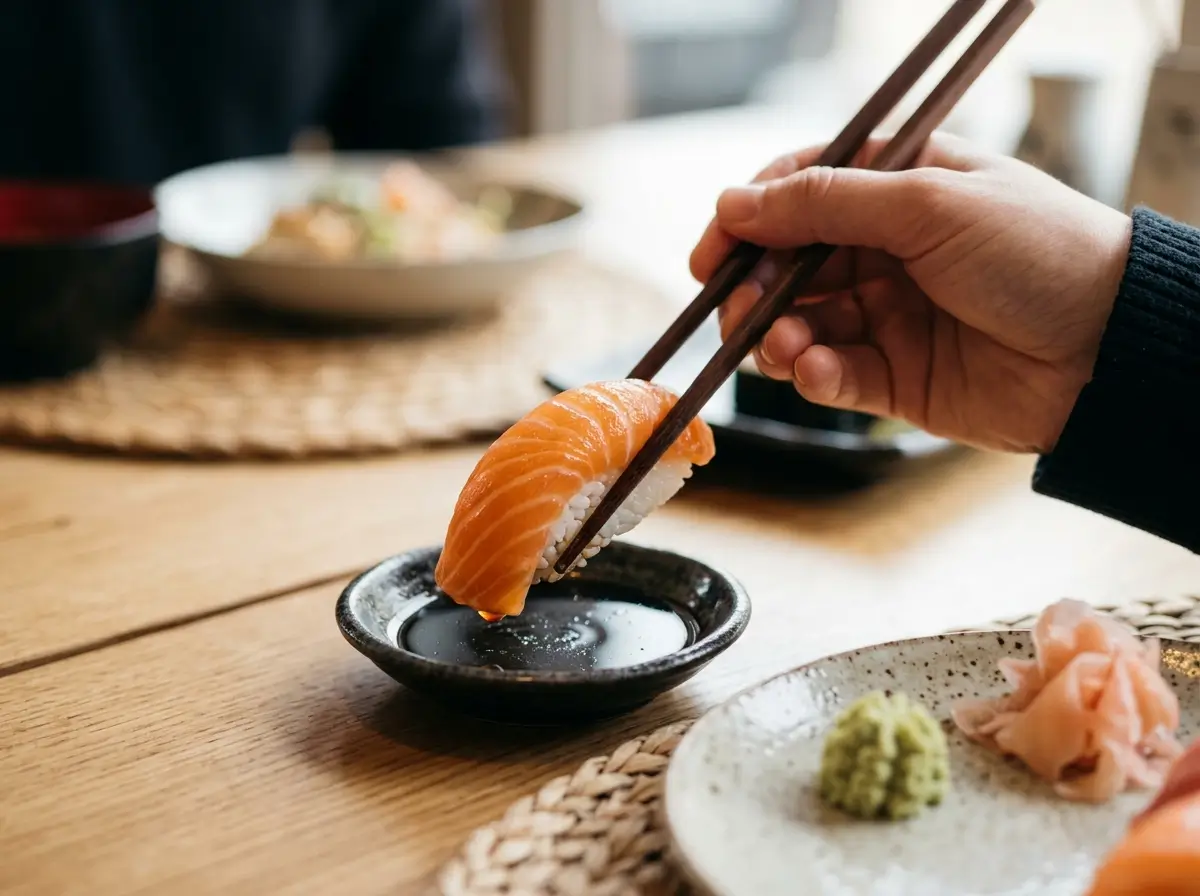
- Nigiri: eat it in one bite, by hand or with chopsticks. Dip the fish side, not the rice, into a little soy sauce so the rice does not fall apart.
- Sashimi: use chopsticks. Add a small dab of wasabi to the fish rather than mixing it into the soy sauce.
- Maki rolls: pick up one piece at a time and dip lightly. If the roll is already sauced, skip the soy.
- Pickled ginger: eat a slice between different fish to refresh your palate. It is not a topping.
Which One Should You Order?
- New to raw fish: start with cooked nigiri such as shrimp or eel, or a simple cucumber or avocado roll.
- Want to taste the fish itself: order sashimi.
- Want a balance of rice and fish: order nigiri.
- Avoiding raw fish: choose cooked rolls and vegetable maki.
Frequently Asked Questions
Is sashimi sushi?
No. Sushi is defined by vinegared rice, and sashimi is sliced raw fish served without rice. They are often served together, but they are different dishes.
Is nigiri sushi?
Yes. Nigiri is one of the main types of sushi: a hand-pressed mound of vinegared rice topped with a slice of fish.
Is all sushi raw fish?
No. Sushi can be made with cooked fish, egg, or vegetables. What makes it sushi is the vinegared rice.
What is the difference between nigiri and maki?
Nigiri is a slice of fish pressed onto a small mound of rice. Maki is rice and fillings rolled in seaweed and cut into pieces.