
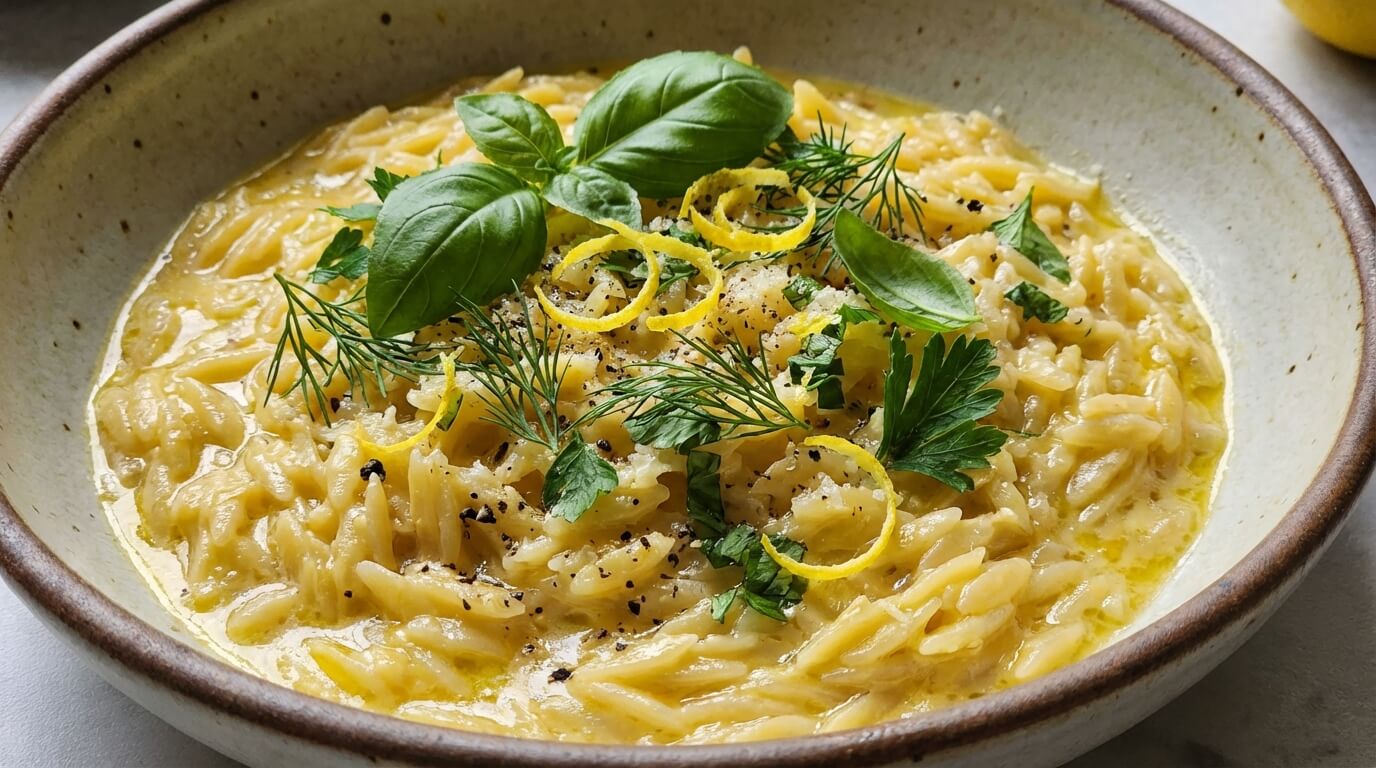
Lemon orzo pasta is a bright, comforting dish that perfectly balances fresh citrus flavor with tender, rice-shaped pasta. Whether you’re looking for a simple lemon orzo pasta to serve as a side dish or a satisfying main paired with chicken, shrimp, or salmon, this recipe style delivers both ease and elegance. Thanks to its light texture and bold lemon notes, lemon orzo pasta fits seamlessly into weeknight dinners, meal prep plans, and even special occasions. In this guide, you’ll learn what makes lemon orzo pasta so popular, how it compares to traditional pasta dishes, and why it works beautifully in creamy, no-cream, Greek-inspired, and salad-style variations—all while keeping flavor, versatility, and simplicity front and center.
Understanding Lemon Orzo Pasta
What Is Lemon Orzo Pasta and Why It’s So Popular
Lemon orzo pasta is a light yet comforting dish made with orzo, a small rice-shaped pasta, combined with fresh lemon juice, zest, olive oil, and simple seasonings. Although it looks like a grain, orzo is actually pasta, which means it cooks quickly and absorbs flavor extremely well. That ability to soak up citrus and herbs is a big reason lemon orzo pasta has become so popular in U.S. home cooking.
Because lemon adds brightness and balance, this dish feels fresh without sacrificing comfort. It works equally well served warm as a cozy dinner option or chilled as a lemon orzo pasta salad for warmer months. Many home cooks turn to it when they want something easy yet impressive, especially since it pairs effortlessly with vegetables, seafood, or poultry. You can explore more variations by browsing related orzo recipes that highlight how adaptable this pasta can be.
Another reason lemon orzo pasta stands out is its flexibility. You can prepare a simple lemon orzo pasta with olive oil and herbs, or you can transform it into a creamy lemon orzo pasta with cheese or dairy-free alternatives. No matter the direction, the base remains flavorful, balanced, and easy to customize.
How Lemon Orzo Pasta Differs From Traditional Pasta Dishes
While orzo is technically pasta, lemon orzo pasta feels very different from classic noodle-based dishes. The small shape of orzo creates a soft, spoonable texture that’s closer to risotto than spaghetti or penne. Because of that, lemon orzo pasta works especially well in one-pan meals, grain bowls, and side dishes.
Lemon also changes how the pasta is perceived on the palate. Its acidity cuts through starchiness, preventing the dish from feeling heavy. That’s why lemon orzo pasta no cream versions can still feel rich and satisfying without relying on butter or thick sauces. Compared to traditional pasta dishes that depend on heavier sauces, lemon orzo pasta focuses more on freshness, balance, and clean flavors.
This difference makes it ideal for both meal prep and entertaining. It stores well, reheats evenly, and doesn’t lose its texture as quickly as long noodles. For dinners, holidays, or weeknight meals, lemon orzo pasta works beautifully as an orzo side dish that complements almost any main course.
Overall, lemon orzo pasta stands apart because it delivers comfort without heaviness and flavor without complexity. That balance explains why it continues to trend across Mediterranean-inspired cooking, simple family meals, and modern home kitchens.

Lemon Orzo Pasta: A Fresh, Easy Dish You’ll Want Every Week
- Total Time: 25 minutes
- Yield: 4 servings 1x
- Diet: Vegetarian
Description
A bright, citrusy orzo pasta dish that balances fresh lemon flavor with tender, rice-shaped pasta—perfect as a light main or a versatile side.
Ingredients
- 1 cup orzo pasta
- 2 tablespoons olive oil
- 1 garlic clove, minced
- 1 lemon (zest and juice)
- Salt and black pepper, to taste
- 2 cups chicken or vegetable broth
- 2 tablespoons chopped fresh parsley
- Optional: 1/4 cup grated Parmesan or crumbled feta
Instructions
- Bring broth to a boil in a medium saucepan.
- Add orzo and cook until al dente, about 7-9 minutes, stirring occasionally.
- Drain excess liquid if needed, then stir in olive oil and minced garlic.
- Add lemon zest and juice. Stir well to combine.
- Season with salt and pepper to taste.
- Fold in fresh parsley and cheese, if using.
- Serve warm as a main or side dish, or chill for a lemon orzo pasta salad.
Notes
Use fresh lemon juice and zest for the brightest flavor. Adjust lemon amount to taste. Pairs well with grilled chicken, shrimp, or salmon.
- Prep Time: 10 minutes
- Cook Time: 15 minutes
- Category: Main or Side Dish
- Method: Stovetop
- Cuisine: Mediterranean
Nutrition
- Serving Size: 1 serving
- Calories: 280
- Sugar: 1g
- Sodium: 380mg
- Fat: 10g
- Saturated Fat: 2g
- Unsaturated Fat: 7g
- Trans Fat: 0g
- Carbohydrates: 37g
- Fiber: 2g
- Protein: 8g
- Cholesterol: 5mg
Keywords: lemon orzo, pasta, citrus, easy, quick, Mediterranean, side dish
Ingredients That Make Lemon Orzo Pasta Shine
Core Ingredients in a Simple Lemon Orzo Pasta Recipe
At its heart, lemon orzo pasta relies on a short list of ingredients that work together to create bold yet balanced flavor. Because the ingredient list is simple, quality matters even more. Orzo is the foundation, and its small shape allows it to absorb lemon and seasoning evenly. Fresh lemon juice and zest bring brightness, while olive oil adds richness without heaviness. Salt, pepper, and garlic round out the base and keep the flavor grounded.
What makes a simple lemon orzo pasta so appealing is how adaptable it is. You can keep it minimal for a clean, Mediterranean-style side, or you can layer in extras like Parmesan, feta, or fresh herbs. Because the flavor profile is neutral but lively, this base works well in both warm dishes and chilled lemon orzo pasta salad variations. If you’re planning meals ahead of time, this combination holds up well without losing texture or taste.
Another benefit is speed. Lemon orzo pasta comes together quickly, which makes it ideal for busy weeknights. Since orzo cooks faster than many traditional pasta shapes, you can have a finished dish on the table in under 30 minutes. That convenience is one reason so many cooks rely on it as a dependable go-to recipe.
Choosing the Best Lemon, Orzo, and Olive Oil for Flavor
Since lemon is the star of lemon orzo pasta, choosing the right type makes a noticeable difference. Fresh lemons are always preferred over bottled juice because they deliver brighter acidity and natural aroma. Using both lemon juice and zest creates depth, as the zest adds floral notes that juice alone can’t provide. This balance keeps the dish vibrant without tasting sour.
Orzo selection matters as well. Most classic lemon orzo pasta recipes use standard semolina orzo, which cooks evenly and maintains a tender bite. Whole wheat orzo is another option if you want a slightly nuttier flavor, although it may require a bit more liquid. No matter the type, cooking orzo just to al dente helps prevent a mushy texture, especially if the dish will be stored or served later.
Olive oil plays a supporting but essential role. A good-quality extra virgin olive oil enhances the lemon rather than masking it. Because lemon orzo pasta often doesn’t rely on heavy sauces, the olive oil flavor is noticeable in every bite. When combined with lemon, it creates a silky finish that coats the orzo evenly.
This ingredient base also supports countless variations, from creamy lemon orzo pasta to lemon orzo pasta no cream styles. Browsing other orzo recipes can help you see how the same core ingredients adapt to different flavors and meals.
Health and Nutrition of Lemon Orzo Pasta
Is Orzo Healthier Than Pasta? A Nutritional Breakdown
A common question about lemon orzo pasta is whether orzo is actually healthier than traditional pasta. The short answer is that orzo and pasta are nutritionally very similar, since orzo is made from wheat just like most pasta shapes. However, the way orzo is typically used can make lemon orzo pasta feel lighter and more balanced overall.
Because orzo is smaller, portion sizes tend to be more controlled. That alone can help reduce excess calories without feeling restrictive. Lemon orzo pasta is also usually prepared with olive oil instead of heavy sauces, which shifts the fat source toward heart-healthy fats rather than saturated ones. When paired with vegetables, lean proteins, or herbs, it becomes a well-rounded dish rather than a carb-heavy meal.
Whole wheat orzo is another option if fiber is a priority. While it has a slightly firmer texture, it works well in lemon orzo pasta recipes that include bold flavors like garlic, herbs, or cheese. Even when using classic semolina orzo, the addition of lemon helps balance richness and keeps the dish from feeling overly starchy.
How Lemon Enhances Digestion and Balance in Orzo Pasta
Lemon plays a much bigger role in lemon orzo pasta than just flavor. Its natural acidity brightens the dish and enhances the taste of other ingredients without adding extra fat or sodium. From a nutrition standpoint, lemon can help stimulate digestion and cut through the density of starch-based foods like orzo.
Another benefit is balance. Lemon offsets richness, which is why even creamy lemon orzo pasta doesn’t feel as heavy as other creamy pasta dishes. In lemon orzo pasta no cream versions, citrus becomes the primary flavor enhancer, reducing the need for butter or cheese. That makes the dish appealing for those who want something satisfying but not overly rich.
Lemon also encourages fresher pairings. Ingredients like spinach, asparagus, zucchini, shrimp, or grilled chicken naturally complement citrus-based dishes. As a result, lemon orzo pasta often includes nutrient-dense additions without feeling forced or overly “healthy.”
Overall, lemon orzo pasta works well for everyday eating because it balances comfort and freshness. It’s filling without being heavy, flavorful without relying on excess ingredients, and flexible enough to fit into a variety of eating styles.
Cooking Techniques for Perfect Lemon Orzo Pasta
How to Cook Orzo for the Best Texture
Cooking orzo correctly is essential for great lemon orzo pasta. While orzo looks small and delicate, it can easily become overcooked if left unattended. The best approach is to cook orzo in well-salted water, just like traditional pasta. This step ensures the orzo is seasoned from the inside, which is especially important in a dish that relies on lemon for brightness rather than heavy sauces.
Timing matters. Orzo cooks quickly, usually in about 7 to 9 minutes. For lemon orzo pasta, it’s best to cook it just until al dente. This keeps the texture slightly firm and prevents it from absorbing too much liquid once lemon juice and olive oil are added. Draining promptly and tossing with a small amount of olive oil can also help prevent sticking.
Another technique that works well is cooking orzo directly in broth. This method allows the pasta to absorb extra flavor while reducing the need for additional seasoning later. When paired with lemon, broth-cooked orzo creates a deeper, more savory base that still tastes fresh and light.
Common Mistakes to Avoid When Making Lemon Orzo Pasta
One of the most common mistakes when making lemon orzo pasta is adding lemon juice too early. Lemon should be added after the orzo is cooked and slightly cooled. If it’s added while the pasta is still boiling hot, the acidity can dull the flavor and sometimes turn it bitter. Adding lemon at the end preserves its brightness and aroma.
Another issue is overloading the dish with liquid. Because orzo absorbs moisture quickly, too much oil, broth, or sauce can cause the pasta to become mushy. This is especially important when making lemon orzo pasta salad or meal-prep versions that will sit for a while. Starting with less liquid and adding more as needed helps maintain the right texture.
Seasoning is another area where balance matters. Lemon enhances flavor, but it can also highlight under-seasoning. Salt and pepper should be adjusted after the lemon is added, not before. This ensures the final dish tastes balanced rather than flat or overly sharp.
Finally, overcrowding the dish with ingredients can mask the clean flavor that makes lemon orzo pasta appealing. While add-ins are welcome, restraint is key. Keeping the ingredient list focused allows the lemon and orzo to remain the stars of the dish.
Popular Lemon Orzo Pasta Variations
Creamy Lemon Orzo Pasta vs Lemon Orzo Pasta No Cream
One of the biggest reasons lemon orzo pasta stays so popular is how easily it adapts to different textures and preferences. Creamy lemon orzo pasta is rich, smooth, and comforting, often made with cream, butter, or cheese such as Parmesan. The lemon cuts through the richness, keeping the dish from feeling heavy. This version works well as a main course, especially when paired with chicken or seafood.
On the other hand, lemon orzo pasta no cream offers a lighter, fresher experience. Instead of dairy, it relies on olive oil, lemon juice, zest, and sometimes a splash of pasta water to create a silky coating. This style is especially appealing in warmer months or when you want a cleaner, Mediterranean-inspired meal. Despite its simplicity, it still feels satisfying because the lemon enhances every bite.
Both versions share the same foundation, which makes switching between them easy. You can even start with a no-cream base and add cheese at the end if desired. That flexibility allows lemon orzo pasta to fit a wide range of tastes without needing a completely different recipe.
Greek Lemon Orzo Pasta and Mediterranean Flavor Profiles
Greek lemon orzo pasta takes inspiration from Mediterranean cooking, where lemon, olive oil, and herbs are used generously. This variation often includes ingredients like feta cheese, garlic, oregano, dill, or parsley. The result is a bright, savory dish that pairs well with grilled meats, roasted vegetables, or seafood.
What sets Greek lemon orzo pasta apart is its balance of acidity and saltiness. Feta adds a tangy contrast that enhances the lemon rather than overpowering it. Olives, cucumbers, or tomatoes are sometimes added for texture and freshness, especially in salad-style versions.
Mediterranean flavor profiles also emphasize simplicity. Instead of heavy sauces, Greek-style lemon orzo pasta focuses on clean ingredients and natural seasoning. This makes it a strong option for both side dishes and light mains. Whether served warm or chilled, it holds its structure and flavor well, which is why it’s often used for gatherings and meal prep.
Overall, these variations show how lemon orzo pasta can shift from creamy comfort food to light, herb-forward cuisine without losing its core appeal.
Protein Additions for Lemon Orzo Pasta
Lemon Orzo Pasta With Chicken or Shrimp
Adding protein turns lemon orzo pasta from a simple side into a satisfying main dish. Lemon orzo pasta with chicken is one of the most popular options because the mild flavor of chicken pairs naturally with citrus. Grilled, roasted, or pan-seared chicken all work well, especially when seasoned lightly with garlic, herbs, and olive oil. The lemon in the orzo helps keep the chicken tasting fresh rather than heavy, which makes this combination ideal for weeknight dinners.
Shrimp is another excellent pairing. Lemon orzo pasta with shrimp feels lighter and cooks quickly, making it a strong choice when time is limited. Shrimp benefits from lemon’s acidity, which enhances its natural sweetness. Because shrimp cooks fast, it’s best added at the very end so it stays tender and juicy. This version is especially popular in warmer months or when you want a seafood-forward dish that still feels comforting.
Both chicken and shrimp allow the lemon orzo pasta to remain the star while adding enough protein to make the meal filling. You can also adjust seasonings easily, keeping the dish simple or adding herbs and spices depending on your preference.
Lemon Orzo Pasta With Salmon for a Balanced Meal
Lemon orzo pasta with salmon offers a slightly richer option that still feels balanced and fresh. Salmon’s natural fattiness pairs beautifully with lemon, creating contrast without overpowering the dish. Whether the salmon is baked, grilled, or pan-seared, the citrus notes in the orzo help cut through the richness and keep the overall flavor light.
This combination is especially appealing for those looking for a more nutrient-dense meal. Salmon adds protein and healthy fats, while lemon orzo pasta provides comfort and texture. Together, they create a dish that feels complete without needing heavy sauces or excessive seasoning.
Salmon also works well in both warm and room-temperature preparations. That makes lemon orzo pasta with salmon a good option for meal prep or entertaining. The flavors continue to develop as the dish rests, which enhances the lemon and herb notes rather than dulling them.
Overall, protein additions like chicken, shrimp, and salmon show just how flexible lemon orzo pasta can be. With minimal adjustments, it easily transitions from a simple side to a well-rounded main course.
Lemon Orzo Pasta as a Side Dish or Salad
Lemon Orzo Pasta Salad for Gatherings and Meal Prep
Lemon orzo pasta salad is one of the most practical ways to serve this dish, especially for gatherings, potlucks, and make-ahead meals. Because orzo holds its shape well, it doesn’t become soggy as quickly as other pasta types. When combined with lemon juice, olive oil, and fresh ingredients, the flavor actually improves as it rests.
This version is often served chilled or at room temperature, which makes it convenient for entertaining. Ingredients like cucumbers, cherry tomatoes, spinach, or herbs add freshness without overwhelming the lemon base. For extra texture, feta cheese or toasted nuts are commonly added, although the salad works just as well without dairy.
For meal prep, lemon orzo pasta salad is especially reliable. It stores well in the refrigerator for several days and can be refreshed with a small splash of olive oil or lemon juice before serving. Because it’s light yet filling, it works as a standalone lunch or as a base for added protein like chicken or shrimp.
Turning Lemon Orzo Into a Versatile Orzo Side Dish
Lemon orzo pasta also shines as a side dish, thanks to its mild but flavorful profile. It pairs easily with grilled meats, roasted vegetables, or seafood without competing for attention. The lemon adds brightness to heavier mains, which helps balance the overall meal.
As a side, lemon orzo pasta can be kept very simple. Olive oil, lemon zest, salt, and pepper are often enough. That simplicity makes it a dependable option when you need something quick that still feels intentional. It also adapts well to seasonal ingredients, allowing you to adjust herbs or vegetables throughout the year.
Because of its texture, lemon orzo pasta is easier to serve than long noodles, especially for larger groups. It plates neatly and doesn’t require special handling. That practicality is why it’s frequently used as an orzo side dish for both casual dinners and special occasions.
Whether served warm or chilled, lemon orzo pasta works equally well as a salad or a side. Its versatility is one of the key reasons it remains a staple in so many kitchens.
lavor Pairings and Sauces for Lemon Orzo Pasta
What Sauce Is Best With Orzo and Lemon-Based Dishes
Lemon orzo pasta doesn’t rely on heavy sauces, which is part of its appeal. Instead, the best sauces are light, balanced, and designed to enhance rather than mask the lemon flavor. Olive oil–based sauces are the most common choice. When combined with lemon juice, zest, and a bit of pasta water, olive oil creates a smooth, glossy coating that clings to the orzo without weighing it down.
For those who prefer something richer, a light cream or yogurt-based sauce works well in small amounts. In creamy lemon orzo pasta, dairy should complement the lemon rather than dominate it. Using just enough cream or cheese to add body keeps the dish from feeling heavy. Lemon naturally brightens these sauces, which is why even creamy versions still feel fresh.
Broth-based sauces are another strong option. Cooking or finishing orzo in chicken or vegetable broth adds depth while keeping the dish light. When finished with lemon, this approach creates a savory, well-rounded flavor that works especially well with chicken, shrimp, or vegetables. Overall, the best sauce for lemon orzo pasta is one that supports simplicity and balance.
Herbs, Cheese, and Add-Ins That Elevate Lemon Orzo
Herbs play a major role in enhancing lemon orzo pasta. Fresh parsley, basil, dill, and oregano all pair naturally with lemon and orzo. Adding herbs at the end preserves their flavor and keeps the dish tasting bright. While dried herbs can be used, fresh herbs make a noticeable difference in both aroma and texture.
Cheese can add depth when used thoughtfully. Parmesan brings a savory note that blends smoothly into warm lemon orzo pasta, while feta adds a tangy contrast, especially in Greek-style or salad versions. The key is moderation. Too much cheese can overpower the lemon and shift the dish toward heaviness.
Add-ins should support the clean flavor profile. Vegetables like spinach, asparagus, zucchini, peas, or roasted tomatoes integrate easily without dominating the dish. For texture, toasted pine nuts or almonds add subtle crunch. Each addition should enhance the lemon orzo pasta rather than distract from its simplicity.
When built carefully, these pairings allow lemon orzo pasta to feel complete without becoming complicated. The result is a dish that’s flexible, flavorful, and easy to adapt to different meals and seasons.
Storage, Serving, and Final Tips
How to Store and Reheat Lemon Orzo Pasta Properly
Lemon orzo pasta stores surprisingly well, which makes it a smart option for leftovers and meal prep. Once cooled, it should be transferred to an airtight container and kept in the refrigerator. Properly stored, it will stay fresh for up to four days without losing its texture. Because orzo absorbs liquid as it sits, the pasta may appear slightly dry when chilled.
Reheating lemon orzo pasta is simple, but gentle heat works best. Warming it on the stovetop over low heat with a splash of water, broth, or olive oil helps loosen the texture without making it mushy. If using a microwave, reheating in short intervals and stirring in between prevents uneven heating. Adding a small squeeze of fresh lemon after reheating can revive the flavor and restore brightness.
For lemon orzo pasta salad, reheating isn’t necessary. Letting it sit at room temperature for a few minutes before serving allows the flavors to open up again. This makes it especially convenient for lunches, gatherings, or make-ahead meals.
Final Tips for Making Restaurant-Quality Lemon Orzo Pasta at Home
To get the best results with lemon orzo pasta, focus on balance. Fresh lemon juice and zest should enhance the dish without overpowering it. Adding lemon gradually and tasting as you go helps avoid excessive acidity. Salt should always be adjusted after the lemon is added, since citrus can change how seasoning is perceived.
Texture is another key factor. Cooking orzo just until al dente ensures it holds up well, especially if the dish will be stored or served later. Avoid overloading the pasta with too many ingredients, as simplicity is part of what makes lemon orzo pasta appealing.
Finally, finish with quality ingredients. A drizzle of good olive oil, fresh herbs, or a light sprinkle of cheese can elevate the dish without complicating it. With a few thoughtful choices, lemon orzo pasta can feel just as polished and satisfying as a restaurant-style meal.
Frequently Asked Questions About Lemon Orzo Pasta
Is orzo healthier than pasta?
Orzo is nutritionally similar to traditional pasta because it’s usually made from wheat. However, lemon orzo pasta often feels lighter because it’s prepared with olive oil, lemon, and vegetables instead of heavy sauces. Portion control and ingredient choices play a bigger role than the pasta shape itself.
What sauce is best with orzo?
Light sauces work best with orzo. Olive oil–based sauces, broth-based finishes, or lightly creamy sauces pair well with lemon orzo pasta. These options enhance flavor without overwhelming the pasta’s delicate texture.
What does lemon do for pasta?
Lemon adds brightness and balance to pasta dishes. In lemon orzo pasta, it cuts through starchiness, enhances other ingredients, and keeps the dish from feeling heavy, even when paired with richer components.
What is special about orzo pasta?
Orzo is special because of its small, rice-like shape. It absorbs flavor well, cooks quickly, and works in a variety of dishes, including salads, side dishes, and one-pan meals. This versatility makes lemon orzo pasta especially adaptable.
Pasta Belongs in Your Weekly Meal Rotation
Lemon orzo pasta earns its place in everyday cooking because it delivers comfort, freshness, and flexibility in one simple dish. It works just as well for quick weeknight dinners as it does for meal prep, gatherings, or seasonal menus. Thanks to its light texture and bright citrus flavor, lemon orzo pasta never feels heavy, even when paired with proteins or served as a main course.
Another reason this dish stands out is how easily it adapts. You can keep it minimal with olive oil and herbs, turn it into a creamy lemon orzo pasta for added richness, or transform it into a refreshing salad for warmer months. No matter the variation, the core ingredients stay approachable and affordable.
Most importantly, lemon orzo pasta strikes a balance between simple and impressive. It doesn’t require complicated techniques, yet it consistently delivers flavor that feels intentional and polished. For home cooks looking to expand their routine without adding stress, this dish is a reliable choice. Don’t miss our… collection of ideas using orzo recipes to keep your meals fresh and inspired.