

Introduction
Homemade oil of oregano is a well-known herbal preparation for anyone interested in natural wellness and traditional remedies made at home. Created by infusing oregano leaves in a carrier oil, this method captures the plant’s natural compounds in a simple and accessible way. Because it doesn’t require distillation or special equipment, homemade oil of oregano is often chosen by beginners and experienced herbal enthusiasts alike.
In this guide, you’ll learn what homemade oil of oregano is, how it differs from essential oil, and why olive oil is commonly used as the base. We’ll also explore how to make oregano oil from fresh leaves, how long homemade oil of oregano is good for, and how to consume homemade oregano oil safely. Along the way, you’ll find practical tips, common mistakes to avoid, and clear answers to frequently asked questions. If you’re also interested in broader wellness approaches, exploring natural immune-support remedies can help you understand how homemade herbal infusions fit into a balanced routine.
Homemade Oil of Oregano: How to Make, Use, and Store It Safely at Home
- Total Time: 10 minutes (plus infusion time)
- Yield: 1 jar
Description
A simple and traditional herbal infusion using oregano leaves and olive oil—perfect for immune and digestive support at home.
Ingredients
- Fresh or dried oregano leaves (enough to fill a jar loosely)
- High-quality extra virgin olive oil (enough to fully submerge the leaves)
- Clean glass jar with lid
- Fine mesh strainer or cheesecloth
Instructions
- Harvest or select oregano leaves. If using fresh leaves, rinse and allow them to air-dry completely to avoid spoilage.
- Lightly crush the dried or fully dried fresh leaves to help release their natural oils.
- Place the oregano leaves into a clean glass jar, loosely filling it without packing too tightly.
- Pour olive oil over the leaves until they are fully submerged, making sure none are exposed to air.
- Seal the jar and place it in a warm, dark area for 4 to 6 weeks, shaking gently every few days.
- After the infusion period, strain the oil using a fine mesh strainer or cheesecloth into a clean container.
- Transfer the strained oil into a dark glass bottle and store in a cool, dark place.
Notes
Use dried oregano for longer shelf life. Avoid high heat during preparation. Store tightly sealed to maintain freshness for up to one year.
- Prep Time: 10 minutes
- Cook Time: 0 minutes
- Category: Wellness
- Method: Infusion
- Cuisine: Traditional Herbal
Nutrition
- Serving Size: 1 teaspoon
- Calories: 40
- Sugar: 0g
- Sodium: 0mg
- Fat: 4.5g
- Saturated Fat: 0.5g
- Unsaturated Fat: 4g
- Trans Fat: 0g
- Carbohydrates: 0g
- Fiber: 0g
- Protein: 0g
- Cholesterol: 0mg
Keywords: oregano oil, homemade oil of oregano, herbal infusion, olive oil, natural remedy
Understanding Homemade Oil of Oregano
What Homemade Oil of Oregano Is and How It’s Made
Homemade oil of oregano is a traditional herbal infusion made by steeping oregano leaves in a carrier oil over time. Instead of using steam distillation like commercial essential oils, this method relies on gentle extraction to pull the plant’s natural compounds into oil. Because of that, homemade oil of oregano is far easier to prepare at home and doesn’t require special tools.
Most commonly, people make homemade oil of oregano with olive oil because it’s stable, widely available, and supports long-term infusion. The oregano leaves, whether fresh or dried, are lightly crushed to release their natural oils. Then, they’re fully submerged in the carrier oil and left to infuse for several weeks or gently warmed to speed up the process.
This slow infusion method allows the oil to absorb oregano’s aromatic properties gradually. As a result, the final product is a milder, more balanced preparation compared to concentrated essential oil. For many people, that gentler nature makes homemade oil of oregano easier to integrate into everyday wellness routines. If you enjoy similar infusion-based approaches, exploring herbal remedies for wellness can help you see how different herbs are traditionally prepared.
Another important point is that homemade oil of oregano is designed for versatility. Because it’s diluted by a carrier oil, it’s commonly used in small amounts rather than drops of undiluted extract. This makes it especially appealing to those who prefer working with whole herbs rather than isolated compounds.
Oil of Oregano vs. Oregano Oil: Key Differences Explained
Although the names sound almost identical, oregano oil and oil of oregano are not the same product. Understanding this difference is essential before making or using either one. Homemade oil of oregano is an infused oil, while oregano oil usually refers to a diluted essential oil product made from steam-distilled oregano.
Oil of oregano products often contain highly concentrated compounds such as carvacrol and thymol. Because of their strength, they’re typically sold pre-diluted and come with strict usage guidelines. In contrast, homemade oil of oregano contains a broader range of plant components but in a much gentler form.
This distinction matters because it affects how the oil is used. Homemade oil of oregano is generally incorporated into wellness routines that focus on gradual, consistent support rather than intensity. That’s why it aligns closely with traditional herbal practices found in cultures around the world. For example, many time-tested preparations rely on infusions rather than distillations, much like those seen in traditional herbal preparations.
Another key difference is accessibility. While essential oils require precise processing, homemade oil of oregano can be made in any kitchen with minimal equipment. Because of this, many people feel more confident controlling the ingredients and strength of their own infusion. If digestive balance is part of your wellness focus, combining gentle infusions with approaches like natural gut-support remedies can create a more well-rounded routine.
By understanding how homemade oil of oregano differs from commercial products, you can choose the option that best fits your needs, experience level, and comfort with herbal preparations.
Benefits of Homemade Oil of Oregano
Homemade Oregano Oil Benefits for Immune and Digestive Support
Homemade oil of oregano is commonly used in wellness routines because of its long-standing association with immune and digestive support. Traditionally, oregano has been valued for its naturally occurring plant compounds, which is why infusing it into oil remains popular today. When prepared at home, homemade oil of oregano offers a gentler alternative to highly concentrated products, making it easier to incorporate consistently.
One reason people turn to homemade oil of oregano is its versatility. Because it’s diluted with a carrier oil, it can be used in small amounts as part of a broader lifestyle approach rather than as a single, high-intensity remedy. Many wellness-focused households prefer this slower, more balanced method, especially when combined with other natural practices. Exploring natural immune-support remedies often reveals similar principles rooted in whole foods and herbs.
Digestive balance is another area where homemade oil of oregano is traditionally included. Herbal infusions have long been used to complement meals or wellness routines that emphasize gut comfort. Because homemade oil of oregano is not as concentrated as essential oil, it’s often viewed as more approachable for those new to herbal preparations. Pairing it with other gentle options, such as fermented foods or drinks, can support an overall wellness-focused lifestyle.
It’s also worth noting that benefits are often associated with consistency rather than intensity. Homemade oil of oregano fits well into this mindset, as it’s designed for gradual use over time rather than immediate, dramatic effects.
Why Homemade Oil of Oregano Is Used for Medicinal Purposes
Homemade oil of oregano has a long history in traditional wellness practices, which explains why many people still prepare it today. Historically, herbs like oregano were infused into oils as a way to preserve their properties and make them easier to use year-round. This method allowed households to rely on simple, shelf-stable preparations instead of fresh herbs alone.
Another reason homemade oil of oregano is used for medicinal purposes is control. When you make it yourself, you decide the type of oregano, the carrier oil, and the infusion time. This flexibility appeals to those who want transparency in their ingredients and prefer avoiding additives or unnecessary processing. Similar values are often seen in traditional herbal preparations, where simplicity and balance are emphasized.
Additionally, homemade oil of oregano is often chosen because it aligns with holistic wellness routines. Instead of being used in isolation, it’s typically combined with other supportive habits such as hydration, nourishing foods, and herbal beverages. For example, incorporating warming drinks alongside herbal oils is a common approach, much like those found in warming herbal-infused drinks.
While homemade oil of oregano is frequently associated with traditional medicinal use, it’s best understood as part of a broader wellness strategy rather than a standalone solution. This perspective helps set realistic expectations and encourages mindful, informed use.
Choosing Ingredients for Homemade Oil of Oregano
Best Carrier Oils for Homemade Oil of Oregano (Olive Oil & More)
Choosing the right carrier oil is one of the most important steps when making homemade oil of oregano. Because the carrier oil absorbs and preserves the oregano’s properties, its quality directly affects the final result. Among all options, olive oil is the most commonly used carrier for homemade oil of oregano, and for good reason.
Extra virgin olive oil is stable, rich in antioxidants, and widely available. It also has a neutral-enough flavor that blends well with oregano without overpowering it. Because olive oil resists oxidation better than many other oils, it helps extend how long homemade oil of oregano is good for when stored properly. This makes it a practical choice for beginners and experienced home herbalists alike.
Other carrier oils, such as coconut oil or avocado oil, are sometimes used as alternatives. Coconut oil offers a longer shelf life but solidifies at cooler temperatures, which can make handling less convenient. Avocado oil has a mild taste and good stability, but it’s often more expensive. For most people, olive oil remains the most balanced option for homemade oil of oregano with olive oil being both effective and accessible.
No matter which carrier oil you choose, freshness matters. Using high-quality oil ensures better infusion results and supports consistent use. This same principle applies across many wellness preparations, including functional natural wellness drinks, where ingredient quality directly impacts the outcome.
Using Fresh vs. Dried Oregano Leaves for Oregano Oil
Another key decision when making homemade oil of oregano is whether to use fresh or dried oregano leaves. Both options work, but they produce slightly different results depending on your goals and availability.
Fresh oregano leaves are often preferred when they’re readily available, especially if you grow your own herbs. They contain natural moisture and vibrant aromatic compounds, which can create a rich infusion. However, fresh leaves must be handled carefully. Excess moisture can lead to spoilage if the leaves aren’t properly dried or if the oil isn’t stored correctly.
Dried oregano leaves, on the other hand, are easier to work with and offer more consistency. Because the moisture has already been removed, dried leaves reduce the risk of mold and extend the shelf life of homemade oil of oregano. This makes them a popular choice for those new to herbal infusions or anyone making oregano oil for medicinal purposes with long-term storage in mind.
If you enjoy harvesting your own herbs, learning about growing herbs for homemade remedies can help you decide when to use fresh leaves and when drying them first might be the better option.
Ultimately, both fresh and dried oregano leaves can be used successfully. The best choice depends on your comfort level, storage plans, and how quickly you plan to use the finished oil. Understanding these ingredient choices sets a strong foundation before moving on to the actual infusion process.
How to Make Homemade Oil of Oregano
How to Make Oregano Oil From Fresh Leaves
Making homemade oil of oregano from fresh leaves is a rewarding process, especially if you have access to garden-fresh herbs. This method allows you to work directly with the plant while preserving its natural aroma and character. However, it also requires a bit of attention to detail to ensure the oil stays fresh and shelf-stable.
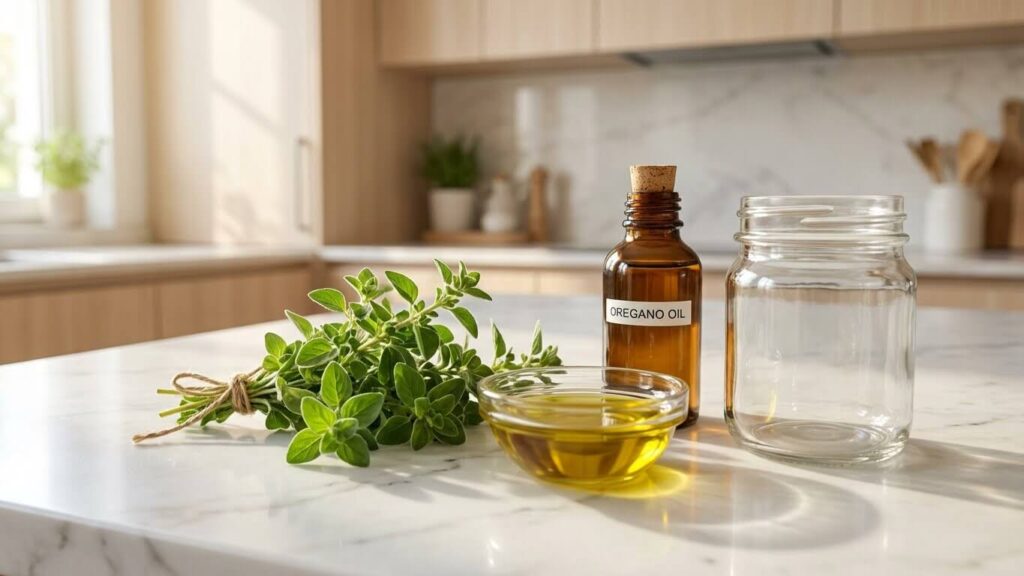
Start by harvesting fresh oregano leaves and rinsing them gently to remove any dirt. After washing, it’s important to let the leaves dry completely. Excess moisture can lead to spoilage, so allowing the leaves to air-dry for several hours is a critical step. Once dry, lightly crush the leaves to release their natural oils.
Next, place the crushed oregano leaves into a clean glass jar and fully cover them with your chosen carrier oil, most commonly olive oil. Make sure all leaves are submerged, as exposure to air can affect the infusion. Seal the jar tightly and place it in a warm, dark area for several weeks, shaking it gently every few days to encourage even extraction.
Over time, the oil will take on the aroma and properties of the oregano. After the infusion period, strain out the leaves using a fine mesh strainer or cheesecloth. The finished homemade oil of oregano can then be transferred to a clean bottle for storage. This slow, traditional method is similar to other infusion-based approaches used in traditional herbal preparations, where patience plays a key role in quality.
How to Make Oregano Oil Quickly at Home
If you’re short on time, there’s also a faster way to make homemade oil of oregano. While this method doesn’t replace the depth of a long infusion, it offers a practical alternative when you want results sooner. The key difference is gentle heat, which speeds up the extraction process.
To begin, prepare your oregano leaves the same way as with the traditional method, ensuring they’re clean and dry. Place the leaves in a heat-safe glass jar and cover them completely with olive oil. Then, set the jar into a saucepan filled with water, creating a makeshift double boiler.
Warm the water on low heat for several hours, making sure it never reaches a boil. Gentle heat helps the oil absorb the oregano’s properties more quickly without damaging the oil. After heating, remove the jar, let it cool, and strain out the leaves.
This quicker method is often preferred by beginners who want to experiment before committing to a long infusion. Even though it’s faster, it still follows the same foundational principles used in many herbal traditions. For those who enjoy combining herbs with beverages, methods like this pair well with routines that include warming herbal-infused drinks.
Regardless of the method you choose, understanding both approaches gives you flexibility. Whether you prefer patience or speed, homemade oil of oregano can be made successfully with simple tools and thoughtful preparation.
Homemade Oil of Oregano With Olive Oil
Step-by-Step Olive Oil Infusion Method
Making homemade oil of oregano with olive oil is the most popular and reliable approach for home use. Olive oil works especially well because it’s stable, easy to find, and supports long infusion times without breaking down. This makes it ideal for anyone learning how to make oregano oil for medicinal purposes at home.
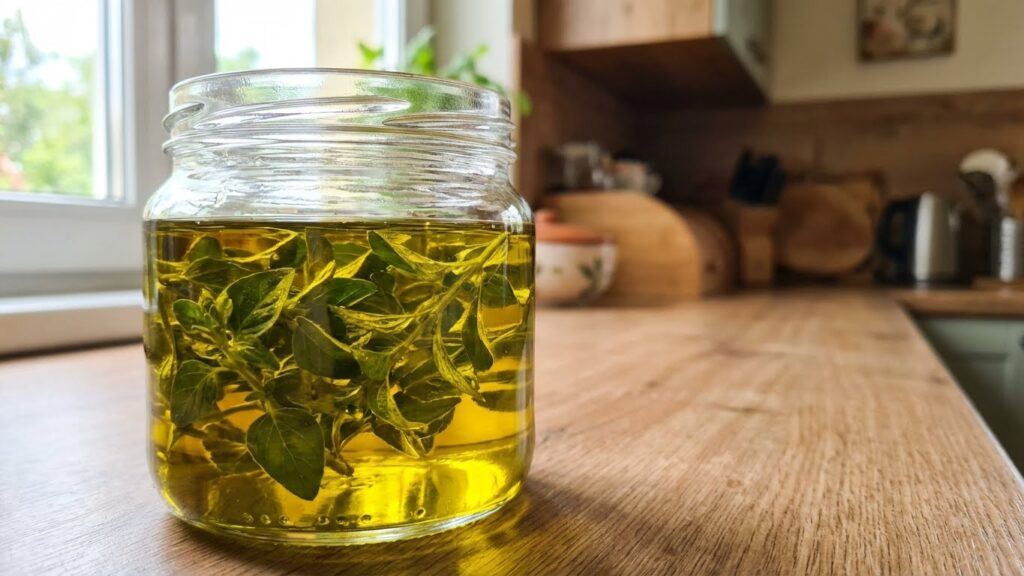
To begin, choose a clean glass jar and fill it loosely with dried or fully dried fresh oregano leaves. Avoid packing the leaves too tightly, as oil needs space to circulate around them. Once the jar is filled, pour olive oil over the leaves until they’re completely submerged. Ensuring full coverage is essential for preventing spoilage and encouraging even extraction.
After sealing the jar, place it in a warm but dark location, such as a kitchen cabinet. Over the next four to six weeks, gently shake the jar every few days. This movement helps the oil absorb the oregano’s natural compounds more evenly. As time passes, you’ll notice the oil developing a stronger herbal aroma, which is a sign the infusion is progressing well.
When the infusion period is complete, strain the oil through a fine mesh strainer or cheesecloth into a clean container. Press the leaves gently to extract as much oil as possible without forcing plant debris through the strainer. The finished homemade oil of oregano should be clear, aromatic, and free of moisture.
This slow infusion method mirrors techniques used in many traditional wellness systems. Similar attention to timing and ingredient quality can also be found in preparations like functional natural wellness drinks, where balance and consistency matter more than speed.
Common Mistakes When Making Homemade Oregano Oil
Although homemade oil of oregano is simple to make, a few common mistakes can affect the final result. One of the most frequent issues is using oregano leaves that still contain moisture. Water trapped in the oil can lead to cloudiness or spoilage, which shortens shelf life.
Another mistake is choosing low-quality olive oil. Because the carrier oil makes up most of the final product, its freshness and purity are critical. Using rancid or overly processed oil can result in an unpleasant taste and reduced stability. Always start with a fresh, high-quality olive oil for best results.
Overheating is another potential problem, especially when attempting faster methods. Excessive heat can damage olive oil and reduce the quality of the infusion. Gentle warmth is effective, but boiling or prolonged high heat should be avoided.
Finally, improper storage can undo all your hard work. Homemade oil of oregano should be kept in a cool, dark place and stored in a tightly sealed container. Proper storage habits are just as important as preparation, much like they are when preserving herbs for long-term use in growing herbs for homemade remedies.
By avoiding these common mistakes, you increase the chances of creating a stable, high-quality homemade oil of oregano that’s ready for mindful, informed use.
How to Use Homemade Oil of Oregano
How to Consume Homemade Oregano Oil Safely
When it comes to using homemade oil of oregano, moderation and consistency matter more than intensity. Because this preparation is an infused oil rather than a concentrated essential oil, it’s typically used in small amounts as part of a broader wellness routine. Many people prefer to mix it with food or beverages instead of consuming it on its own.
A common approach is to add a small amount of homemade oil of oregano to warm foods, such as soups or cooked vegetables, where it blends naturally with other ingredients. This method helps dilute the flavor and makes it easier to incorporate regularly. Some also choose to mix it with a spoonful of honey or another mild food to balance the taste.
It’s important to avoid heating homemade oil of oregano at high temperatures once it’s prepared. Excessive heat can reduce its quality and alter the oil’s structure. Instead, adding it after cooking or to gently warm dishes works best. This same principle applies to many herbal preparations designed for daily use, including those found in warming herbal-infused drinks.
For topical use, homemade oil of oregano is often diluted further with additional carrier oil before being applied to the skin. This extra dilution helps reduce sensitivity and supports more comfortable use, especially for those with sensitive skin.
Dosage Tips for Homemade Oil of Oregano
Because homemade oil of oregano varies in strength depending on the oregano used and infusion time, there’s no universal dosage that works for everyone. That’s why starting small is generally recommended. Using minimal amounts allows you to observe how your body responds before increasing use.
Many people view homemade oil of oregano as a supportive addition rather than a primary solution. It’s often combined with other habits such as balanced meals, hydration, and gentle herbal beverages. Pairing it with fermented or cultured foods, for example, can complement routines focused on digestion, similar to approaches seen in natural gut-support remedies.
Another helpful tip is consistency over frequency. Using homemade oil of oregano occasionally in small amounts is often preferred over frequent or excessive use. This mindset aligns with traditional herbal practices that emphasize long-term balance rather than short-term intensity.
As with any homemade preparation, listening to your body is essential. If something doesn’t feel right, reducing use or pausing altogether is a sensible step. Homemade oil of oregano is meant to support a thoughtful wellness approach, not replace mindful habits or professional guidance.
Safety, Storage, and Shelf Life
How Long Is Homemade Oil of Oregano Good For?
One of the most common questions about homemade oil of oregano is how long it stays usable. The shelf life largely depends on the ingredients used, the infusion method, and how the oil is stored. When made with fully dried oregano leaves and a high-quality carrier oil like olive oil, homemade oil of oregano can typically last several months to up to one year.
Moisture is the biggest factor that affects longevity. If fresh oregano leaves weren’t completely dried before infusion, excess water can shorten shelf life and increase the risk of spoilage. That’s why many people prefer dried oregano when making oregano oil for medicinal purposes intended for longer storage.
You can often tell if homemade oil of oregano has gone bad by changes in smell, appearance, or texture. A sour, musty, or rancid odor is a clear sign it should no longer be used. Cloudiness or visible mold also indicates spoilage. When in doubt, it’s always safer to discard and make a fresh batch.
This emphasis on freshness mirrors other wellness preparations where timing and storage matter, such as fermented foods and drinks used in natural gut-support remedies. Paying attention to these details helps maintain quality and safety over time.
Proper Storage to Preserve Homemade Oregano Oil
Proper storage plays a major role in preserving homemade oil of oregano. Once strained, the oil should be transferred to a clean, airtight container, preferably made of dark glass. Dark bottles help protect the oil from light exposure, which can accelerate oxidation and reduce quality.
Storing homemade oil of oregano in a cool, dark place is ideal. A pantry or cupboard away from heat sources works well. Refrigeration isn’t always necessary, but it can extend shelf life, especially in warmer climates. If the oil thickens slightly when chilled, allowing it to return to room temperature before use usually resolves this.
Another important storage tip is minimizing air exposure. Always close the container tightly after each use. Repeated exposure to air can slowly degrade the oil, even if all other conditions are ideal.
These same storage principles apply across many homemade wellness items. Whether you’re preserving infused oils or preparing ingredients for growing herbs for homemade remedies, attention to environment and handling makes a noticeable difference.
By following these safety and storage guidelines, you can help ensure that your homemade oil of oregano remains stable, effective, and enjoyable to use throughout its intended lifespan.
Frequently Asked Questions About Homemade Oil of Oregano
Can You Make Oregano Oil at Home?
Yes, you can absolutely make oregano oil at home, and it’s actually quite simple. Homemade oil of oregano is made by infusing oregano leaves in a carrier oil, most commonly olive oil. This process doesn’t require special equipment or technical skills, which makes it accessible for beginners.
What’s important is understanding that homemade oil of oregano is an infused oil, not an essential oil. That distinction means the process is gentler and safer for home preparation. With proper drying of the leaves, clean tools, and correct storage, making oregano oil at home is both practical and reliable.
Many people enjoy this DIY approach because it allows full control over ingredients and freshness. It also fits naturally into a broader lifestyle focused on simple, homemade wellness practices.
Is Oil of Oregano Stronger Than Antibiotics?
Oil of oregano is often discussed in comparison to antibiotics, but they are not the same and shouldn’t be viewed as direct substitutes. Commercial oil of oregano products usually contain concentrated compounds extracted through steam distillation, which makes them significantly stronger than homemade oil of oregano.
Homemade oil of oregano is much milder because it’s diluted in a carrier oil and contains a broader range of plant components rather than isolated compounds. Because of this, it’s generally used as part of a wellness routine rather than as an aggressive intervention.
It’s important to keep expectations realistic. Homemade oil of oregano is valued for traditional and supportive use, not for replacing medical treatments or prescribed medications.
What Is the Best Carrier Oil to Mix With Oregano Oil?
Olive oil is widely considered the best carrier oil for homemade oil of oregano. It’s stable, easy to find, and supports long infusion times without breaking down. Extra virgin olive oil, in particular, is often preferred because of its quality and antioxidant content.
Other oils, such as coconut oil or avocado oil, can also be used, but they come with trade-offs. Coconut oil solidifies at cooler temperatures, while avocado oil tends to be more expensive. For most people, olive oil offers the best balance of stability, flavor, and shelf life.
Choosing a high-quality carrier oil is essential because it makes up the majority of the final product and directly affects how long homemade oil of oregano is good for.
What’s the Difference Between Oregano Oil and Oil of Oregano?
The difference between oregano oil and oil of oregano often causes confusion. Oregano oil typically refers to an infused oil made by soaking oregano leaves in a carrier oil. This is what most people mean when they talk about homemade oil of oregano.
Oil of oregano, on the other hand, usually refers to a commercial product made from oregano essential oil that has been diluted for use. These products are much more concentrated and require careful handling.
Understanding this difference helps you choose the right option for your needs. Homemade oil of oregano is generally gentler and better suited for everyday wellness routines, while essential oil-based products are far more potent.
Final Thoughts on Homemade Oil of Oregano
When Homemade Oregano Oil Is Worth Making
Homemade oil of oregano is worth making if you value simple ingredients, hands-on preparation, and traditional wellness practices. Because it requires only oregano leaves, a carrier oil, and patience, it fits naturally into a lifestyle focused on mindful, homemade solutions. Many people appreciate the ability to control every step of the process, from ingredient quality to infusion time.
This type of preparation works best when viewed as part of a broader routine rather than a quick fix. Homemade oil of oregano is most effective when combined with balanced meals, hydration, and other supportive habits. Exploring complementary approaches, such as natural immune-support remedies, can help place this infusion into a more complete wellness framework.
For those who enjoy working with herbs, homemade oil of oregano also offers a deeper connection to traditional practices. The process itself encourages patience and intention, which are often missing from modern convenience-based solutions.
Who Should Avoid Homemade Oil of Oregano
Although homemade oil of oregano is generally gentle compared to essential oil products, it isn’t suitable for everyone. People with sensitivities to oregano or olive oil should avoid using it. Likewise, those with specific health conditions or dietary concerns should approach any homemade herbal preparation thoughtfully.
Homemade oil of oregano is not intended to replace medical advice or treatment. Instead, it’s best seen as a supportive option within a well-rounded lifestyle. If you’re unsure whether it fits your needs, reducing use or avoiding it altogether is a sensible choice.
Ultimately, the value of homemade oil of oregano lies in informed, moderate use. When prepared carefully and used mindfully, it can be a practical addition to a wellness-focused routine rooted in simplicity and tradition.