
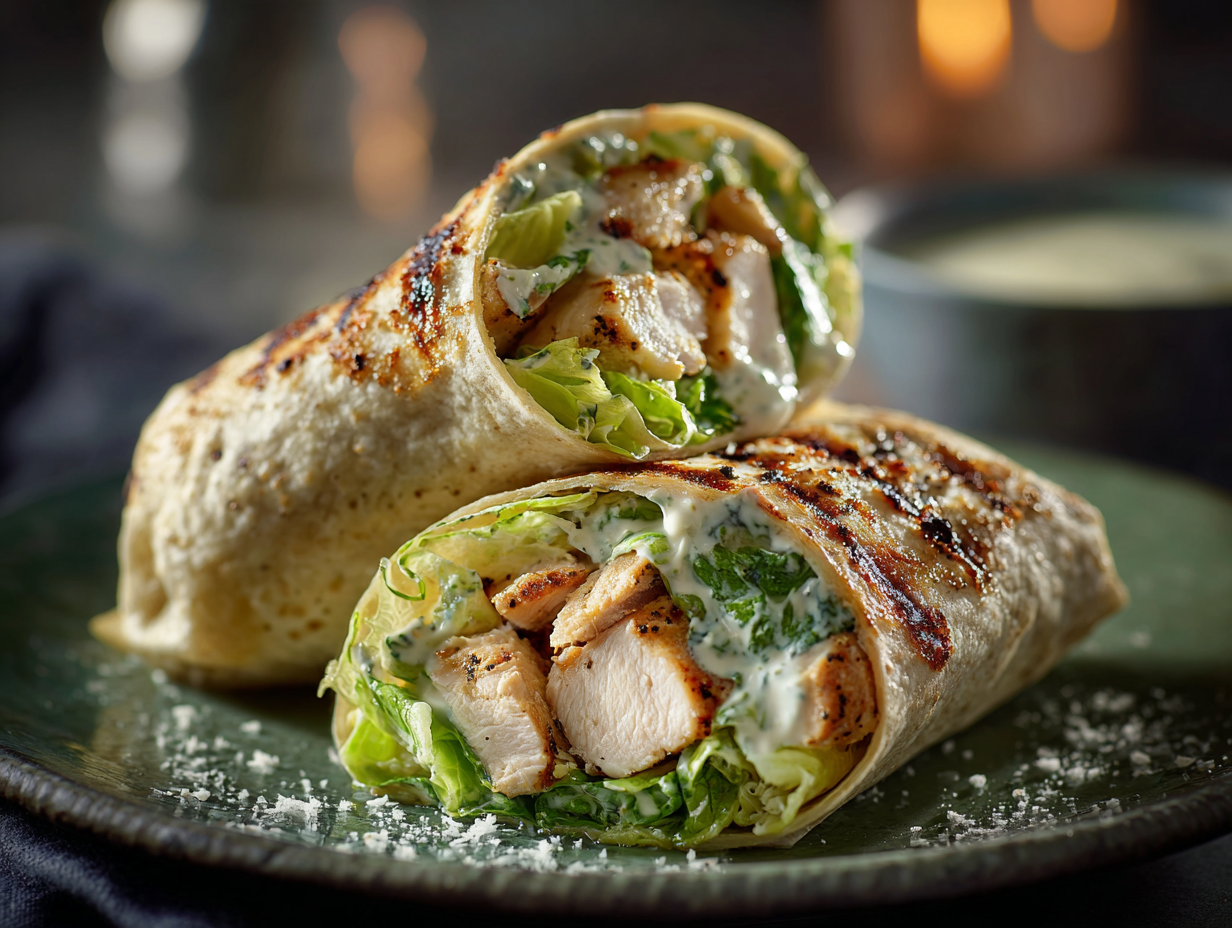
Chicken caesar wrap lovers, this one’s for you — because the version you can make at home in under 25 minutes genuinely beats most of what you’ll find at a deli counter or fast-casual restaurant. The difference comes down to a few details: properly seasoned chicken, a thick and creamy dressing used in the right amount, romaine that’s actually dry, and a tortilla warm enough to fold without cracking. Get those four things right, and everything else falls into place.
This guide covers the full picture — what goes into a classic chicken caesar wrap, which tortilla works best, how to get the chicken crispy without a deep fryer, whether you need mayo, how to make it keto-friendly, and a step-by-step recipe you can follow from start to finish. Whether you’re making one wrap for lunch or prepping a batch for the week, this has you covered.
What Is a Chicken Caesar Wrap, Exactly?
At its core, a chicken caesar wrap is a caesar salad folded into a tortilla — but the execution matters a lot more than the concept. The classic version includes cooked chicken, romaine lettuce, caesar dressing, parmesan cheese, and croutons, all wrapped tightly in a large flour tortilla. What makes it different from just a caesar salad is the portability and the way the wrap compresses and traps flavors together as you eat it. The dressing soaks slightly into the lettuce, the chicken adds substance and texture, and the tortilla acts as a mild, neutral backdrop that lets the bold savory caesar flavor take center stage.
It’s a format that works equally well for meal prep, weeknight dinners, or lunchboxes. If you love the caesar flavor profile beyond just wraps, these caesar salad ideas are worth exploring — there are more ways to use that dressing than most people expect.
Full Ingredient Breakdown
A well-made chicken caesar wrap relies on a short list of quality components. For the base, you need boneless skinless chicken breasts or thighs, chopped romaine lettuce, a thick creamy caesar dressing, freshly grated parmesan, and large flour tortillas in the 10 to 12-inch range. Beyond that, croutons added at the very last second before rolling are highly recommended for texture, and a small squeeze of lemon juice on the cooked chicken adds brightness that cuts through the richness of the dressing. Garlic powder, paprika, and a pinch of onion powder round out the chicken seasoning nicely. Cherry tomatoes, freshly cracked black pepper, and a drizzle of hot sauce are all optional but worth considering.
On the protein side, rotisserie chicken pulled or shredded makes an excellent shortcut, grilled chicken strips work well, and thinly sliced breaded chicken cutlets are a popular restaurant-style variation. The one non-negotiable is the dressing itself — a thin or watery caesar will ruin the wrap no matter how good the other elements are. Look for something thick and emulsified. Brands like Ken’s Steakhouse, Primal Kitchen, and Cardini’s tend to hold up well inside a wrap without making the tortilla soggy.
What Tortillas Are Best for Caesar Wraps?
The tortilla choice matters more than most people realize. A tortilla that’s too small tears before you can finish rolling. One that’s too thick or too cold cracks at the first fold. And certain specialty tortillas have flavors strong enough to compete with the filling rather than support it.
The table below lays out the most common options and how they perform:
| Tortilla Type | Texture | Best For | Watch Out For |
|---|---|---|---|
| Large flour (10–12″) | Soft, pliable | Classic wrap, meal prep | Can get soggy if overdressed |
| Spinach or herb flour | Mild flavor, slight color | Visual appeal, mild extra flavor | Same sog risk as plain flour |
| Whole wheat flour | Slightly denser, earthy | Nutrition-conscious builds | Can dry out and crack if cold |
| Low-carb/keto tortillas | Firmer, less pliable | Keto-friendly versions | Some brands tear easily when cold |
| Gluten-free flour | Varies by brand | GF dietary needs | Test foldability before filling |
The standard large flour tortilla wins for most situations — it’s flexible, neutral in flavor, and handles a generous filling without splitting. Warming it briefly before assembly makes a significant difference. About 20 to 30 seconds in a dry skillet or 15 seconds in the microwave wrapped in a damp paper towel is all it takes. If you enjoy tortilla-based meals and want another format to try, these French dip tortilla roll-ups use the same warm-and-roll technique with a completely different flavor profile.
How to Make Crispy Chicken for Your Wrap
The chicken is the star of this wrap, and getting it right makes everything else better. There are three reliable approaches depending on how much time you have.
Pan-Seared Chicken (Quickest)
Season chicken breasts or thighs evenly with salt, black pepper, garlic powder, and a light dusting of paprika. Heat a tablespoon of avocado oil or light olive oil in a skillet over medium-high heat, then cook the chicken 5 to 6 minutes per side until golden brown and cooked through to an internal temperature of 165°F. Let it rest on a cutting board for 3 to 4 minutes before slicing into strips against the grain. That resting time is what keeps the chicken juicy rather than dry. For more inspiration on getting the most out of chicken breasts, this roundup of best chicken breast recipes covers a wide range of techniques worth having in your rotation.
Air Fryer Chicken (Best for Crispy Texture)
Season the chicken the same way, spray it lightly with oil, and air fry at 375°F for 14 to 16 minutes, flipping once at the halfway point. The result is a slightly crispier exterior than stovetop without any deep frying involved — exactly the texture that holds up well inside a wrap rather than turning soft.
Rotisserie Shortcut
Pre-cooked rotisserie chicken, either shredded or pulled, is a completely legitimate shortcut that saves around 20 minutes and brings excellent flavor from the seasoning it was cooked in. This is the approach most people reach for on busy weeknights. If you often find yourself with cooked chicken on hand and want ideas beyond wraps, these leftover rotisserie chicken recipes cover a lot of ground. For a meal-prep approach, crockpot shredded chicken is worth making in bulk on the weekend and pulling from throughout the week.
Do You Put Mayo on a Chicken Caesar Wrap?
This question comes up often, and the answer is straightforward: you don’t have to, but some people find it useful. Traditional caesar dressing already has a creamy emulsified base — classic versions use egg yolk and oil, and most commercial versions have a similar richness. That base is generally enough on its own to provide creaminess in the wrap without any additional spread.
Where mayo does serve a purpose is as a very thin barrier on the inside of the tortilla before filling. The idea is that it can help slow down moisture migration from the dressing into the tortilla, which may extend how long the wrap stays intact — particularly useful if you’re packing it for lunch several hours ahead. If you’re eating the wrap immediately after assembling it, skip the mayo entirely and let the caesar dressing do its job.
Can You Eat a Chicken Caesar Wrap on Keto?
The answer depends almost entirely on the tortilla. A standard large flour tortilla typically contains between 25 and 35 grams of net carbohydrates, which puts it outside the range most keto approaches allow for a single meal. The chicken, romaine, parmesan, and most commercially available caesar dressings are naturally low in carbs, so those components don’t require adjustment.
For a keto-compatible version, low-carb flour tortillas from brands like Mission Carb Balance or Ole Xtreme Wellness typically come in at 4 to 7 grams of net carbs per tortilla and fold reasonably well when warmed. Skipping the tortilla entirely and using large romaine or butter lettuce leaves as the wrap eliminates those carbs completely and keeps the caesar flavor fully intact. Replacing croutons with toasted sunflower seeds or crushed almonds adds a satisfying crunch without the added carbohydrates. If you’re interested in other low-carb wrap formats, these cottage cheese wrap recipes offer a high-protein base that pairs well with similar fillings.
Individual dietary needs vary. If you’re managing carbohydrate intake for health reasons, checking the nutritional labels on your specific products and consulting a healthcare professional when needed is always a reasonable step.
Crispy Chicken Caesar Wrap — Step-by-Step Recipe
Prep time: 10 minutes | Cook time: 12–15 minutes | Total: ~25 minutes | Servings: 2 wraps
Ingredients
For the chicken: 2 boneless skinless chicken breasts, 1 tsp garlic powder, 1 tsp paprika, ½ tsp onion powder, salt and black pepper to taste, 1 tbsp avocado oil or light olive oil.
For the wrap: 2 large flour tortillas (10–12 inch), 2 cups romaine lettuce chopped, ¼ cup freshly grated parmesan, ⅓ cup thick creamy caesar dressing, ½ cup croutons added just before rolling, freshly cracked black pepper.
Instructions
Step 1 — Season and cook the chicken. Pat the chicken dry with paper towels. Combine the garlic powder, paprika, onion powder, salt, and pepper, then coat both sides of the chicken evenly. Heat the oil in a skillet over medium-high heat and cook the chicken 5 to 6 minutes per side until fully cooked through at 165°F internal temperature. Transfer to a cutting board, rest for 3 to 4 minutes, then slice into thin strips against the grain.
Step 2 — Prep the filling. Toss the chopped romaine with the caesar dressing in a medium bowl, starting with about 2 to 3 tablespoons — less than you think you need. Add the parmesan and toss again. Taste and adjust at this stage rather than after rolling.
Step 3 — Warm the tortillas. Heat each tortilla in a dry skillet for 20 to 30 seconds per side, or microwave it wrapped in a damp paper towel for 15 seconds. A warm tortilla folds without cracking or splitting at the seam.
Step 4 — Build the wrap. Lay the tortilla flat on a clean surface. Add the dressed romaine in the center, leaving about a 2-inch border on all sides. Layer the chicken strips over the top, then add the croutons last. A few extra turns of cracked pepper and an additional pinch of parmesan at this stage make a noticeable difference.
Step 5 — Wrap it tightly. Fold in both sides toward the center, then roll from the bottom up while keeping the filling tucked in firmly as you go. Press gently along the seam to seal it. Slice diagonally for serving.
Step 6 — Optional seam toast. Place the wrap seam-side down in the still-warm skillet for 30 to 45 seconds. This seals the fold and adds a slight exterior crisp — a small step that improves the texture and makes the wrap easier to hold and eat.
Tips to Keep Your Wrap From Getting Soggy
Sogginess is the most common complaint with caesar wraps, and it’s almost always the result of one of a few avoidable mistakes. Overdressing is the biggest culprit — romaine continues releasing moisture after it’s been tossed, so going lighter on the dressing than feels intuitive is the right call, especially if the wrap isn’t being eaten immediately. Croutons should always be added at the very last second before rolling since they absorb dressing quickly and turn soft within minutes of contact. Romaine should be thoroughly dried after washing — wet lettuce accelerates sogginess faster than most people expect. The chicken should cool slightly before it goes into the wrap, since hot chicken creates steam that softens the tortilla from the inside. And if the wrap is being packed for lunch, keeping the dressing on the side and assembling at mealtime is the most reliable way to maintain texture over several hours.
Variations Worth Trying
A spicy version is one of the easiest upgrades — a drizzle of sriracha or a few dashes of hot sauce stirred into the caesar dressing before tossing adds heat that pairs well with the savory parmesan base without overwhelming it. Buffalo chicken caesar is another popular direction: use buffalo-sauced chicken in place of plain seasoned chicken and the tangy heat works naturally with the creamy dressing. For something with more vegetable content, roasted red peppers, grilled zucchini, or sliced cucumber add freshness and texture without changing the fundamental flavor profile. Adding a soft-boiled egg, sliced lengthwise, on top of the chicken before rolling gives the wrap extra richness and makes it noticeably more filling.
A Few Notes on Calories and Nutrition
A homemade chicken caesar wrap made with a standard large flour tortilla, approximately 4 oz of cooked chicken, 2 to 3 tablespoons of caesar dressing, romaine, and parmesan may fall somewhere in the general range of 450 to 650 calories, though that number shifts meaningfully depending on the specific products used and the amount of dressing added. The tortilla and the dressing together typically account for the majority of the calorie content, so switching to a smaller tortilla and a lighter dressing are the two most effective adjustments for those managing intake.
These are general estimates only. For precise nutritional information based on your exact ingredients, a dedicated nutritional calculator or guidance from a registered dietitian will give you a much more accurate picture.
Final Thoughts
A good chicken caesar wrap comes down to a small number of things done well — properly seasoned chicken cooked to a golden crust, crisp dry romaine, a thick dressing used sparingly, and a warm tortilla folded tightly enough to hold together from first bite to last. None of those things are complicated, but all of them matter. Get the fundamentals right and this becomes one of the most reliable meals in your regular rotation: fast enough for a weeknight, satisfying enough to look forward to, and flexible enough to adjust based on what you have on hand.
Frequently Asked Questions
What all is in a chicken caesar wrap?
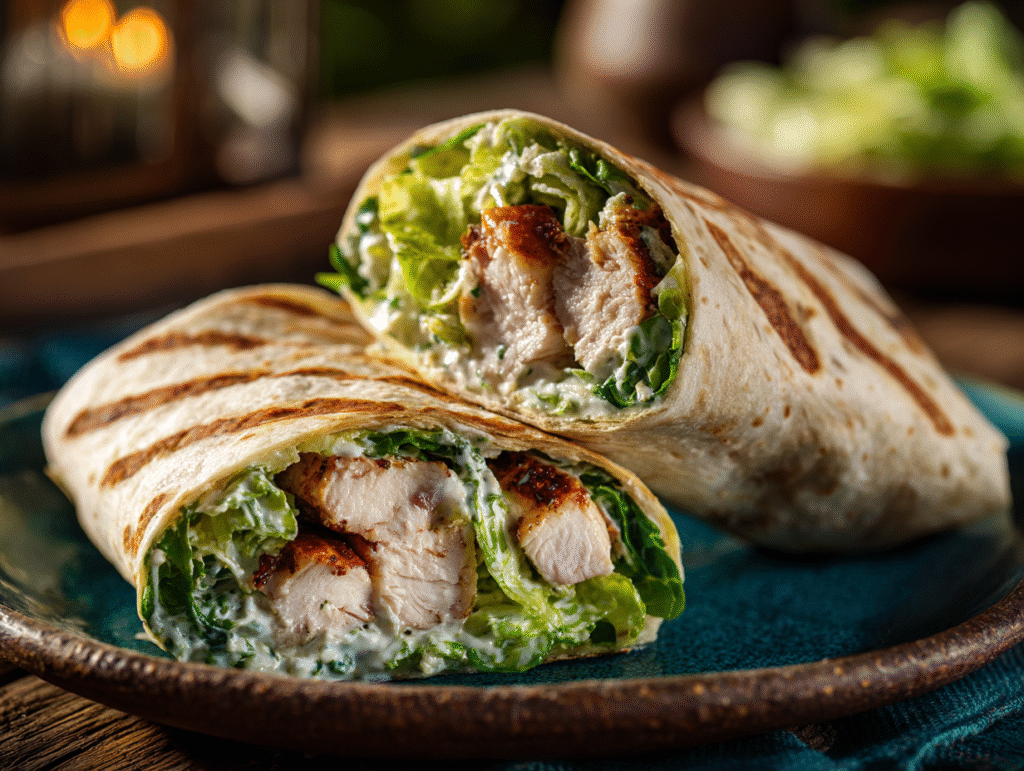
A standard chicken caesar wrap typically contains cooked chicken (grilled, pan-seared, or crispy), chopped romaine lettuce, caesar dressing, parmesan cheese, croutons, and a large flour tortilla. Some versions include tomatoes, black pepper, or a squeeze of lemon. The exact contents can vary depending on whether it's homemade or from a restaurant.
Can I eat a chicken caesar salad on keto?
In most cases, a caesar salad without croutons can fit into a keto diet — chicken, romaine, parmesan, and most creamy caesar dressings are naturally low in carbs. The wrap version requires a swap: use a low-carb tortilla or skip the tortilla entirely and serve it as a salad or lettuce wrap. Always check the labels on your specific dressing and tortilla brands to confirm carb content, as these can vary quite a bit.
What tortillas are best for caesar wraps?
Large flour tortillas (10–12 inch) are generally considered the best option for caesar wraps because they're flexible, neutral in flavor, and hold fillings well. Warming the tortilla slightly before wrapping helps prevent cracking. Low-carb flour tortillas are a solid option for those reducing carbohydrate intake. Avoid small or thin tortillas — they tend to tear under the weight of the filling.
Do you put mayo on a chicken caesar wrap?
It's not required. Caesar dressing already provides a creamy element, so adding mayo is a personal preference rather than a standard part of the recipe. Some people apply a thin layer of mayo to the inside of the tortilla to act as a moisture barrier, which may help extend how long the wrap stays non-soggy — useful if packing ahead for lunch.
A Few Notes on Calories and Nutrition
A homemade chicken caesar wrap can vary quite a bit in nutritional content depending on the portion of dressing used, the size of the tortilla, and whether croutons are included. As a general reference point, a wrap made with a standard flour tortilla, approximately 4 oz of grilled chicken, 2–3 tablespoons of caesar dressing, romaine, and parmesan typically falls somewhere in the range of 450–650 calories — though this is an estimate and your specific ingredients will affect the number.
The majority of calories in a caesar wrap tend to come from the tortilla and the dressing. Using a light caesar dressing and a smaller tortilla can reduce the total if that’s a goal.
These figures are general estimates only. For specific dietary planning, a registered dietitian or nutritional calculator with your exact ingredients will give you the most accurate information.
Final Thoughts
A good chicken caesar wrap doesn’t need much — just quality ingredients, properly seasoned and crispy chicken, a creamy dressing used in the right amount, and a tortilla warm enough to fold without tearing. The details are what separate a wrap you’ll actually look forward to from one that falls apart or tastes flat.
This is one of those recipes that gets better the more times you make it, because you start to find your own balance — more parmesan, a touch of lemon, extra crunch from the croutons. Once you have the base down, the variations are easy to explore.
Print
Chicken Caesar Wrap
- Total Time: 30 minutes
- Yield: 4 servings 1x
Description
Anna Paul’s Turkish pasta recipe is a creamy, savory viral dish made with tender pasta, spiced ground beef, garlicky yogurt, and a buttery paprika sauce that’s comforting, bold, and weeknight-friendly.
Ingredients
- 12 oz short pasta (rigatoni, penne, or fusilli)
- 1 lb ground beef
- 2 tbsp olive oil
- 1 small onion, finely chopped
- 3 cloves garlic, minced
- 1 tsp paprika
- 1 tsp smoked paprika
- 1 tsp chili flakes
- Salt and black pepper, to taste
- 1 cup plain Greek yogurt
- 2 cloves garlic, grated
- 3 tbsp unsalted butter
- 1 tsp tomato paste
- Fresh parsley, chopped (optional)
Instructions
- Bring a large pot of salted water to a boil and cook the pasta until al dente. Reserve 1/2 cup pasta water and drain.
- Heat olive oil in a skillet over medium heat and cook the onion until soft and translucent.
- Add ground beef and cook until browned, breaking it apart.
- Stir in minced garlic, paprika, smoked paprika, chili flakes, salt, and black pepper, cooking until fragrant.
- Mix Greek yogurt with grated garlic and a pinch of salt in a small bowl.
- Melt butter in a saucepan over low heat and stir in tomato paste and paprika until aromatic.
- Toss pasta with the beef mixture, adding pasta water as needed.
- Spread yogurt on a plate, top with pasta, and drizzle with paprika butter sauce.
Notes
Adjust chili flakes for heat, thin yogurt with pasta water if needed, and keep yogurt and butter sauce separate when storing leftovers.
- Prep Time: 10 minutes
- Cook Time: 20 minutes
- Category: Dinner
- Method: Stovetop
- Cuisine: Turkish-Inspired
Nutrition
- Serving Size: 1 serving
- Calories: 520
- Sugar: 4g
- Sodium: 680mg
- Fat: 28g
- Saturated Fat: 12g
- Unsaturated Fat: 14g
- Trans Fat: 0g
- Carbohydrates: 42g
- Fiber: 3g
- Protein: 30g
- Cholesterol: 105mg
Keywords: Anna Paul Turkish pasta recipe, viral pasta, Turkish pasta, yogurt pasta, ground beef pasta