
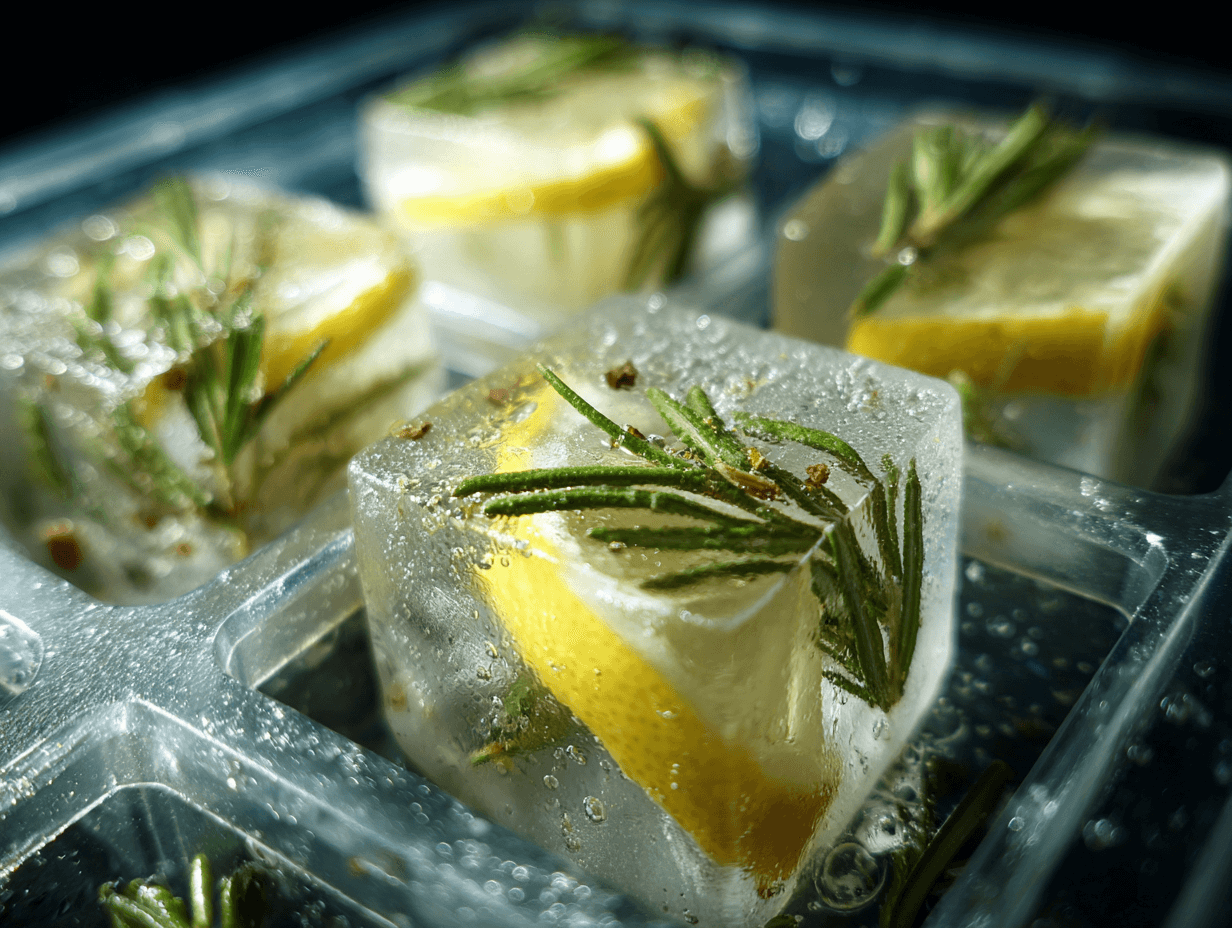
Rosemary citrus ice cubes are a simple yet elegant way to add fresh flavor, aroma, and visual appeal to everyday drinks. By freezing rosemary with lemon or other citrus, you can create lemon rosemary ice cubes that slowly infuse water, tea, mocktails, and cocktails as they melt. Not only are rosemary ice cubes easy to make, but they’re also a natural alternative to flavored syrups or sweeteners. Whether you’re looking for refreshing immune-boosting drinks, creative lemon drink ideas, or stylish flavored ice cubes for entertaining, rosemary citrus ice cubes offer a versatile solution that works year-round.
Rosemary Citrus Ice Cubes
- Total Time: 8 hours 10 minutes (includes freezing time)
- Yield: 12 ice cubes
Description
Simple, elegant rosemary citrus ice cubes add fresh flavor and visual appeal to water, tea, mocktails, and cocktails. They’re a beautiful and natural way to upgrade any drink.
Ingredients
- Fresh rosemary sprigs (washed and patted dry)
- Thin slices of lemon, lime, orange, or grapefruit (seeds removed)
- Filtered or boiled-and-cooled water
- Optional: Citrus zest
Instructions
- Rinse rosemary sprigs under cold water and pat them completely dry.
- Slice citrus fruits thinly and remove seeds. Prepare zest if using.
- Place a small rosemary sprig and a citrus slice or zest into each compartment of an ice cube tray.
- Slowly fill each compartment with filtered or cooled boiled water.
- Tap tray gently on the counter to remove air bubbles.
- Freeze for 6–8 hours or until completely solid.
- Once frozen, transfer cubes to an airtight container or freezer bag.
- Use within 1 month for best flavor and aroma.
Notes
For clearest cubes, use filtered or previously boiled water. Use small sprigs to avoid overpowering flavor. Store away from strong-smelling foods to preserve aroma.
- Prep Time: 10 minutes
- Cook Time: 0 minutes
- Category: Drinks
- Method: Freezing
- Cuisine: Universal
Nutrition
- Serving Size: 1 cube
- Calories: 1
- Sugar: 0g
- Sodium: 0mg
- Fat: 0g
- Saturated Fat: 0g
- Unsaturated Fat: 0g
- Trans Fat: 0g
- Carbohydrates: 0g
- Fiber: 0g
- Protein: 0g
- Cholesterol: 0mg
Keywords: rosemary citrus ice cubes, lemon rosemary ice cubes, herb ice cubes, flavored ice cubes, mocktail cubes
Can You Put Rosemary in Ice Cubes Safely?
Yes, you can absolutely put rosemary in ice cubes, and it’s completely safe when done correctly. In fact, rosemary is one of the best herbs for freezing because of its firm, woody structure and strong natural oils. Unlike delicate herbs that can turn mushy, rosemary holds its shape well and continues to release flavor slowly as the ice melts.
To ensure the best results, always use fresh, clean rosemary. Rinse the sprigs thoroughly under cold water to remove dirt or residue, then pat them dry. This step matters because trapped moisture or debris can affect both taste and clarity. Once clean, rosemary can be frozen whole, chopped, or paired with citrus slices, zest, or juice depending on how you plan to use the rosemary ice cubes.
Another benefit is that freezing rosemary helps preserve its aroma. As the ice melts in a drink, the herb gently infuses without becoming overpowering. This makes rosemary citrus ice cubes ideal for water, iced tea, sparkling drinks, and mocktails where balance is important. Because of this slow infusion, rosemary ice cubes are more forgiving than fresh rosemary added directly to drinks.
Can I Freeze Herbs in Ice Cubes Without Losing Flavor?
You can freeze herbs in ice cubes without losing flavor, as long as you use the right method. Freezing actually helps lock in essential oils, which are responsible for aroma and taste. However, the way you freeze herbs determines how well they perform once thawed.
For rosemary citrus ice cubes, water-based freezing works very well because rosemary is sturdy. Simply placing rosemary sprigs into an ice cube tray and filling it with filtered water is enough to preserve flavor. That said, some herbs benefit from being frozen in citrus juice or lightly infused water instead of plain water. Lemon juice, for example, enhances rosemary’s natural pine-like notes while also helping maintain brightness.
It’s important to note that frozen herbs won’t have the same texture as fresh ones once thawed. However, when used in ice cubes, texture isn’t a drawback because the herbs are meant to infuse flavor, not be eaten. This is why herb ice cubes are so popular for drinks and cooking.
If you’re interested in pairing rosemary ice cubes with warm beverages once melted, don’t miss our creative lemon drink ideas at ginger lemon coffee. For decorative uses and serving inspiration, you can also check out citrus treats and garnishes at homemade lemon drops recipe/.
Best Citrus Fruits for Citrus Ice Cubes
Choosing the right citrus is essential when making rosemary citrus ice cubes because each fruit brings a different level of acidity, sweetness, and aroma. While lemon rosemary ice cubes are the most popular option, other citrus fruits work just as well depending on the drink you’re preparing.
Lemons are the top choice because they’re bright, refreshing, and pair naturally with rosemary’s earthy notes. Thin lemon slices, lemon zest, or freshly squeezed juice all freeze beautifully and release flavor gradually as the ice melts. Because of this balance, lemon rosemary ice cubes work well in water, iced tea, sparkling drinks, and mocktails.
Oranges offer a sweeter, softer citrus profile. When paired with rosemary, they create a more rounded flavor that’s ideal for brunch drinks or lightly sweetened beverages. Blood oranges also add visual impact, making rosemary citrus ice cubes look even more appealing in clear glasses.
Limes are sharper and more intense. They work best in mocktails, sparkling water, and summer drinks where you want a bold citrus punch. Grapefruit, on the other hand, brings a slightly bitter edge that pairs well with rosemary in more sophisticated, adult-style drinks.
When preparing citrus for ice cubes, always slice thinly and remove seeds. This helps maintain clarity and ensures the cubes freeze evenly. Using organic citrus is also recommended, especially if you plan to include the peel or zest.
Fresh vs Dried Rosemary for Ice Cubes
When it comes to rosemary ice cubes, fresh rosemary is always the better option. Fresh rosemary contains natural oils that release aroma and flavor slowly as the ice melts. Dried rosemary, while useful for cooking, doesn’t hydrate well in ice and can create a cloudy appearance.
Fresh rosemary sprigs also enhance presentation. A single sprig frozen upright in a cube creates a clean, elegant look that’s perfect for entertaining. Because rosemary holds its structure, it won’t wilt or break down during freezing.
That said, if fresh rosemary isn’t available, dried rosemary can still be used for infused water before freezing. In this case, strain the rosemary out after infusing and freeze only the liquid. This method preserves flavor without affecting texture.
For decorative finishing touches once your drinks are served, check out citrus treats and garnishes, which pair beautifully with rosemary citrus ice cubes.
How to Make Rosemary Citrus Ice Cubes Step-by-Step
Making rosemary citrus ice cubes is simple, but following a clear process helps you get better flavor and cleaner-looking ice. With just a few ingredients and tools, you can prepare a batch that lasts for weeks.
Start by washing fresh rosemary sprigs under cold water. This removes dirt and helps prevent cloudy ice. Pat the rosemary dry with a clean towel. Next, prepare your citrus. Thin slices of lemon, lime, or orange work best because they freeze evenly and fit neatly into ice cube trays. If you’re using zest, grate only the outer peel to avoid bitterness.
Place one small rosemary sprig or a few rosemary leaves into each compartment of your ice cube tray. Add a thin citrus slice or a pinch of zest. Then slowly pour filtered water over the ingredients, filling each section almost to the top. Using filtered or boiled-and-cooled water improves clarity and taste.
Once filled, gently tap the tray on the counter to release air bubbles. Freeze for at least 6 to 8 hours, or until fully solid. After freezing, transfer the rosemary citrus ice cubes to an airtight freezer bag or container to prevent freezer odors from affecting flavor.
These ice cubes are best used within one month for optimal aroma and taste, although they remain safe to use longer.
Lemon Rosemary Ice Cubes for Beginners
If you’re new to making flavored ice cubes, lemon rosemary ice cubes are the easiest place to start. The flavor combination is forgiving, balanced, and works well in many drinks.
Begin with small rosemary sprigs rather than large woody stems. This prevents the rosemary from overpowering the citrus. Use thin lemon slices or a small amount of fresh lemon juice instead of thick wedges. Less is more when you’re just starting out.
For beginners, plain water is the best freezing liquid. Once you’re comfortable, you can experiment with lightly infused lemon water for stronger flavor. Avoid sweeteners at this stage, as sugar can affect how the ice freezes.
Lemon rosemary ice cubes are perfect for water, iced tea, and sparkling drinks. They’re also an easy upgrade for wellness beverages and non-alcoholic drinks. Looking for inspiration? Try pairing them with ideas from flavored ice cubes for mocktails</a> to explore more creative combinations.
Rosemary Ice Cubes for Drinks and Cocktails
Rosemary ice cubes are an easy way to enhance drinks without adding extra sugar or artificial flavors. As they melt, they slowly release herbal notes that elevate both simple and complex beverages. Because rosemary has a strong yet balanced aroma, it works well in cold drinks where flavor develops gradually.
In water and sparkling water, rosemary ice cubes add a refreshing, spa-like quality. Pairing them with lemon or grapefruit creates a clean, crisp taste that feels light but satisfying. These combinations are especially popular for hydration drinks and afternoon refreshers.
For cocktails, rosemary citrus ice cubes bring both flavor and visual appeal. They pair well with gin-based drinks, vodka spritzers, and light rum cocktails. As the ice melts, it subtly infuses the drink instead of overwhelming it, which helps maintain balance. Rosemary ice cubes also work beautifully in prosecco or sparkling wine, adding aroma without altering the drink’s structure too much.
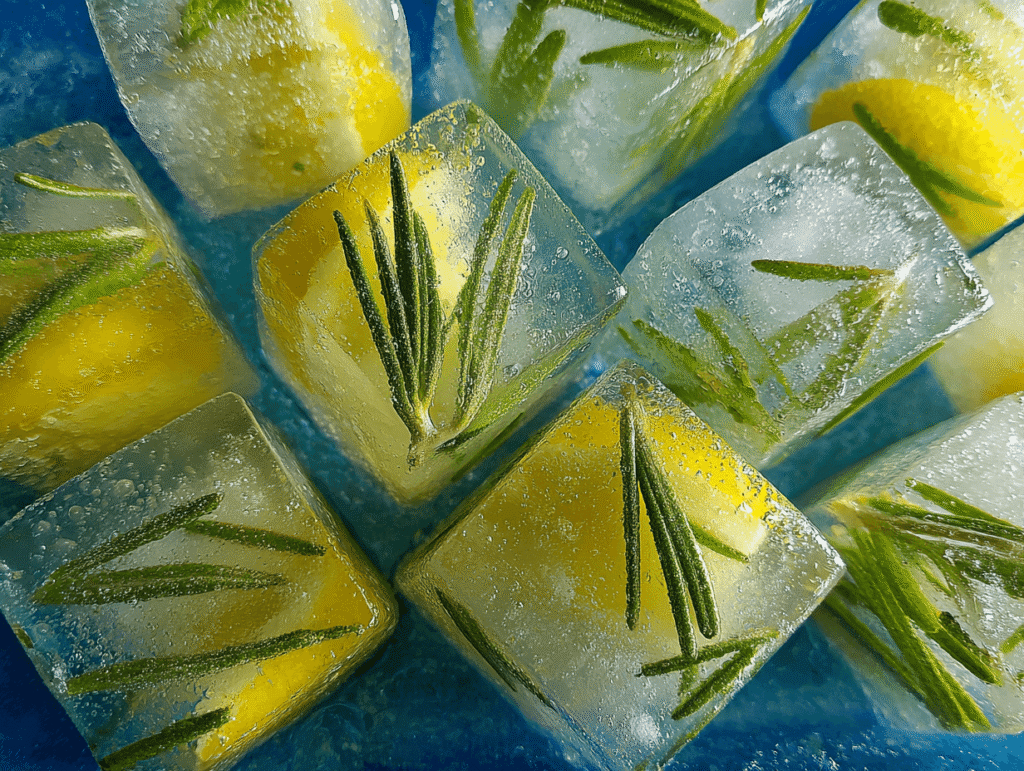
Because they’re visually striking, rosemary ice cubes are often used for entertaining. A clear cube with a rosemary sprig and citrus slice instantly makes a drink feel more intentional and elevated.
Flavored Ice Cubes for Mocktails and Wellness Drinks
Flavored ice cubes are especially popular in mocktails and wellness drinks because they allow you to build flavor naturally. Rosemary citrus ice cubes fit perfectly into this trend since they don’t rely on syrups or artificial enhancers.
In mocktails, these ice cubes pair well with citrus juices, herbal teas, and sparkling water. They’re also a great addition to electrolyte drinks, helping balance flavor while keeping things refreshing. As the ice melts, the drink evolves, which makes each sip more interesting.
Wellness drinks benefit from rosemary’s aromatic properties and citrus’s brightness. Many people use rosemary ice cubes in detox water, infused tea, or lightly sweetened herbal blends. For additional ideas that blend citrus and spice, explore ginger lemon coffee, which offers a creative take on citrus-forward beverages.
If you’re serving drinks at gatherings, mocktail-friendly rosemary ice cubes are a smart choice because they suit all ages and preferences. They’re easy to prepare ahead of time and can be mixed into a wide range of beverages without clashing flavors.
What Herbs Are Good in Ice Cubes Besides Rosemary?
While rosemary is one of the most popular choices, many other herbs work beautifully in ice cubes. Choosing the right herb depends on the type of drink you’re making and the flavor profile you want to achieve. Like rosemary ice cubes, most herbs infuse gently as the ice melts, making them ideal for both flavor and presentation.
Mint is one of the most commonly used herbs in ice cubes. It’s refreshing, light, and works well in water, iced tea, lemonades, and mocktails. Basil is another excellent option, especially when paired with citrus like lemon or lime. Basil ice cubes add a slightly sweet, peppery note that complements summer drinks.
Thyme is similar to rosemary but milder. It freezes well and pairs nicely with lemon, orange, and grapefruit. Sage can also be used, although it should be added sparingly because its flavor is strong. Lavender, when used in very small amounts, creates floral ice cubes that work well in sparkling drinks and herbal teas.
Like rosemary citrus ice cubes, these herb ice cubes are best made with fresh herbs. Fresh herbs maintain color, structure, and aroma much better than dried versions when frozen.
Creative Herb and Citrus Ice Cube Combinations
Once you’re comfortable making rosemary ice cubes, experimenting with different herb and citrus combinations becomes easy. Mixing flavors allows you to tailor ice cubes to specific drinks or occasions.
Lemon and rosemary remain a classic pairing, but rosemary also works well with orange and grapefruit for a deeper citrus profile. Mint pairs perfectly with lime for bright, refreshing drinks. Basil and lemon create a clean, slightly sweet combination that’s ideal for water and mocktails.
For more adventurous blends, try thyme with orange slices or sage with lemon zest. These combinations feel more refined and are often used in mocktails or sparkling drinks served at gatherings. The key is balance—use small amounts of herbs so they enhance rather than overpower the drink.
Herb and citrus ice cubes aren’t just functional; they’re decorative too. Clear cubes with visible herbs and citrus slices instantly elevate presentation, making even simple drinks feel special.
How to Store and Preserve Rosemary Citrus Ice Cubes
Proper storage is essential if you want rosemary citrus ice cubes to keep their flavor and aroma. Although freezing preserves herbs well, exposure to air and odors in the freezer can affect quality over time. For best results, transfer the ice cubes from the tray to an airtight freezer-safe container or resealable freezer bag once they’re fully frozen.
Label the container with the date so you know how long they’ve been stored. Rosemary ice cubes are best used within one month for peak flavor, although they can last up to three months without becoming unsafe. Over time, the citrus aroma may fade, and the rosemary may lose some of its freshness.
To prevent freezer burn, remove as much air as possible from storage bags. Storing the cubes away from strong-smelling foods is also important, as ice absorbs odors easily. If you notice a change in smell or taste, it’s best to discard the cubes and make a fresh batch.
When ready to use, take out only the number of cubes you need. Repeated thawing and refreezing can reduce both clarity and flavor.
Common Mistakes When Making Herb Ice Cubes
One common mistake is using too much rosemary. Because rosemary has a strong aroma, overcrowding the ice cube tray can lead to overpowering flavor. Using small sprigs or a few leaves per cube is usually enough.
Another mistake is skipping the cleaning step. Herbs and citrus should always be washed and dried before freezing. Dirt, residue, or excess moisture can make the ice cloudy and affect taste.
Using thick citrus slices is another issue. Thick pieces don’t freeze evenly and can crack the ice cubes. Thin slices or zest work much better for both appearance and infusion.
Finally, using tap water without filtering can result in cloudy ice and off-flavors. Filtered or boiled-and-cooled water produces clearer, better-tasting rosemary citrus ice cubes.
How to Make Citrus Essential Oils at Home
Many people interested in rosemary citrus ice cubes also ask about making citrus essential oils at home. While both use citrus, the processes and purposes are very different. Citrus essential oils are concentrated extracts made from citrus peels, whereas citrus ice cubes are meant for gentle flavor infusion.
To make citrus essential oils at home, the focus is on extracting oil from the peel, not the juice. Citrus peels contain natural oils that can be released through methods such as cold infusion or alcohol-based extraction. These methods take time and require careful handling to avoid contamination or spoilage.
One common home method involves drying citrus peels, soaking them in a neutral oil or alcohol, and allowing the mixture to infuse for several weeks. The liquid is then strained, leaving behind a citrus-scented oil. While effective, this process produces a product that’s far more concentrated than citrus used in ice cubes.
It’s important to note that homemade citrus essential oils are typically used for aromatherapy, cleaning, or cosmetic purposes—not for freezing into ice cubes or direct consumption unless prepared specifically for culinary use.
Citrus Essential Oil vs Rosemary Citrus Ice Cubes: Key Differences
Although they share similar ingredients, citrus essential oils and rosemary citrus ice cubes serve completely different roles. Essential oils are highly concentrated and designed for aroma or topical use, while rosemary ice cubes are meant to lightly flavor drinks as they melt.
Rosemary citrus ice cubes are food-safe, simple to prepare, and designed for everyday use. They allow you to enjoy subtle citrus and herb flavors without the risk of overconsumption. In contrast, citrus essential oils require careful dilution and aren’t interchangeable with fresh citrus in drinks.
Another key difference is accessibility. Making rosemary ice cubes requires minimal tools and ingredients, making them ideal for beginners. Essential oil extraction, on the other hand, takes more time, precision, and storage considerations.
For most people looking to enhance drinks, rosemary citrus ice cubes are the safer, easier, and more practical option. They deliver freshness, aroma, and visual appeal without the complexity of oil extraction.
Health Benefits of Rosemary and Citrus in Drinks
Rosemary and citrus aren’t just flavorful—they also bring gentle wellness benefits when used in drinks. Rosemary is known for its aromatic compounds, which contribute to a refreshing sensory experience and can make simple water feel more satisfying. Because of this, rosemary ice cubes are often used to encourage better hydration throughout the day.
Citrus fruits like lemon, lime, and orange add natural acidity and brightness. They’re commonly associated with vitamin C and are widely used in wellness drinks and infused waters. When combined, rosemary and citrus create a balanced flavor that feels clean and revitalizing without the need for added sugar.
Using rosemary citrus ice cubes is also a mindful way to reduce sweetened beverages. As the ice melts, it gently flavors the drink, making plain water, iced tea, or sparkling water more enjoyable. This small change can help support healthier daily habits without feeling restrictive.
What Drinks Can You Make With Rosemary Ice Cubes?
Rosemary ice cubes work in a wide range of drinks, which is why they’re so popular. The most common option is infused water—still or sparkling—where the rosemary and citrus slowly release flavor. They’re also excellent in iced green tea, herbal tea, or lightly sweetened lemonade.
For entertaining, rosemary citrus ice cubes are often added to mocktails and cocktails. They pair well with gin, vodka, prosecco, and citrus-forward mixers. In non-alcoholic options, they elevate mocktails made with sparkling water, citrus juice, or electrolyte blends.
You can even use rosemary ice cubes in pitchers for gatherings, allowing guests to enjoy consistent flavor as the ice melts. Because they’re subtle, they won’t overpower drinks, making them suitable for many tastes and occasions.
FAQs
Can you put rosemary in ice cubes?
Yes, rosemary can be safely frozen in ice cubes. Fresh rosemary holds its shape and flavor well when frozen and slowly infuses drinks as the ice melts.
Can I freeze herbs in ice cubes?
Yes, many herbs freeze well in ice cubes. Sturdy herbs like rosemary, thyme, and mint are especially good choices for flavored ice cubes.
What herbs are good in ice cubes?
Rosemary, mint, basil, thyme, sage, and lavender are all commonly used in ice cubes. The best herb depends on the drink and desired flavor profile.
What drinks can you make with rosemary?
Rosemary works well in water, sparkling water, iced tea, mocktails, cocktails, and citrus-based drinks. It pairs especially well with lemon, lime, and orange flavors.
Conclusion
Rosemary citrus ice cubes are a simple, elegant way to add natural flavor and visual appeal to drinks. Whether you’re making lemon rosemary ice cubes for daily hydration or creating flavored ice cubes for mocktails and entertaining, they’re easy to prepare and versatile to use. With the right balance of fresh herbs and citrus, rosemary ice cubes can transform ordinary drinks into something refreshing and intentional—all with minimal effort.