
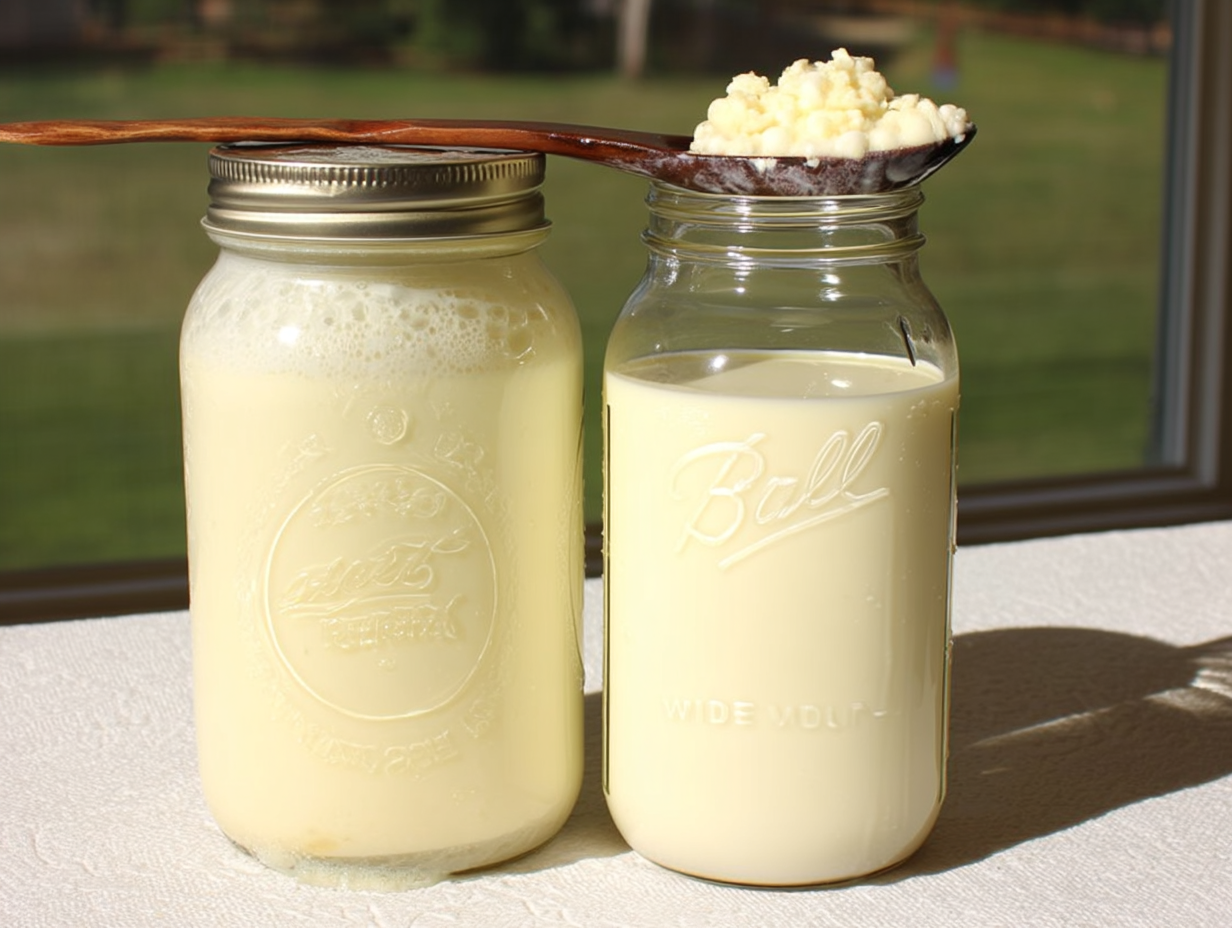
Learning how to make milk kefir at home is one of the easiest ways to add a naturally fermented drink to your daily routine. Milk kefir is creamy, slightly tangy, and made with just two ingredients: milk and kefir grains. Unlike yogurt, it ferments at room temperature and requires no special equipment.
If you already enjoy homemade drinks like royal milk tea, milk kefir is a simple next step into home fermentation.
Why You’ll Love It
Print
How to Make Milk Kefir at Home
- Total Time: 24 hours
- Yield: 2 cups 1x
- Diet: Vegetarian
Description
Learning how to make milk kefir at home is one of the easiest ways to add a naturally fermented drink to your daily routine. Creamy, tangy, and made with just milk and kefir grains—no special equipment needed.
Ingredients
- 1 tablespoon active milk kefir grains
- 2 cups whole milk (cow’s milk works best)
Instructions
- Place the kefir grains into a clean glass jar.
- Pour the milk over the grains, leaving about 1 inch of space at the top.
- Cover the jar loosely with a lid or breathable cloth.
- Let the jar sit at room temperature, out of direct sunlight, for 24 hours.
- Check the consistency. It should look slightly thickened and smell tangy.
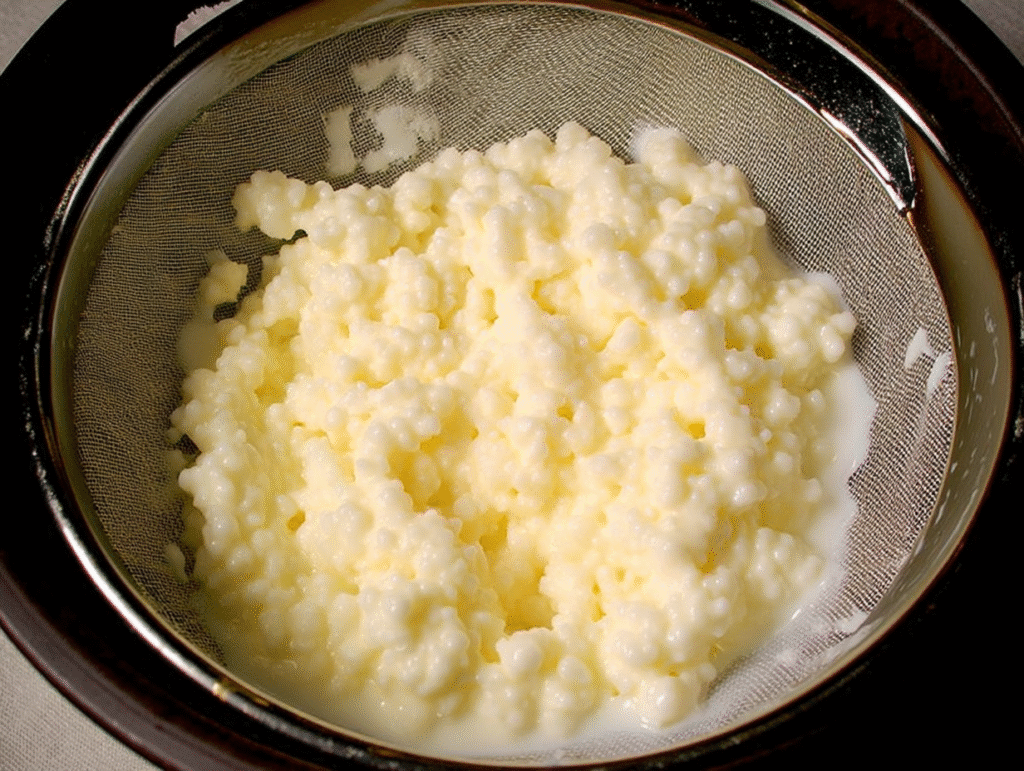
- Strain the kefir using a plastic or stainless steel strainer.
- Transfer the finished kefir to the refrigerator and reuse the grains.
Notes
Whole milk produces the creamiest kefir. Avoid ultra-pasteurized milk as it can slow fermentation. For a thicker kefir, ferment up to 36 hours. For milder flavor, strain at 18–20 hours. Add fruit or vanilla for a second ferment in the fridge for 12 hours.
- Prep Time: 5 minutes
- Cook Time: 0 minutes
- Category: Beverage
- Method: Fermenting
- Cuisine: Probiotic
Nutrition
- Serving Size: 1/2 cup
- Calories: 80
- Sugar: 6g
- Sodium: 50mg
- Fat: 4g
- Saturated Fat: 2.5g
- Unsaturated Fat: 1.5g
- Trans Fat: 0g
- Carbohydrates: 6g
- Fiber: 0g
- Protein: 4g
- Cholesterol: 15mg
Keywords: milk kefir, homemade kefir, fermented drink, probiotic
- Beginner-friendly: No heating, thermometers, or cultures to buy.
- Budget-smart: Kefir grains multiply, so one batch leads to many.
- Versatile: Drink it plain or use it in smoothies, baking, and sauces.
- Consistent results: Ferments reliably at room temperature.
Ingredients
- 1 tablespoon active milk kefir grains
- 2 cups whole milk (cow’s milk works best)
Whole milk produces the creamiest kefir, but 2% milk also works. Avoid ultra-pasteurized milk if possible, as it can slow fermentation.
Instructions
- Place the kefir grains into a clean glass jar.
- Pour the milk over the grains, leaving about 1 inch of space at the top.
- Cover the jar loosely with a lid or breathable cloth.
- Let the jar sit at room temperature, out of direct sunlight, for 24 hours.
- Check the consistency. It should look slightly thickened and smell tangy.
- Strain the kefir using a plastic or stainless steel strainer.
- Transfer the finished kefir to the refrigerator and reuse the grains.
Tips & Variations
- Thicker kefir: Let it ferment for up to 36 hours.
- Milder flavor: Strain after 18–20 hours.
- Second ferment: Add fruit or vanilla and refrigerate for another 12 hours.
Milk kefir works beautifully in baked goods. Try replacing buttermilk with kefir in recipes like cottage cheese pancakes for extra tenderness.
Substitutions
- Low-fat milk: Results in thinner kefir.
- Lactose-free milk: Ferments more slowly but still works.
- Non-dairy milk: Not recommended for long-term grain health.
Serving Suggestions
- Blend into smoothies with berries and honey
- Use as a base for salad dressings
- Pour over granola or cereal
Kefir can also be used in desserts, like the batter for kefir sheet cake, where it adds moisture and a subtle tang.
Storage & Reheating
Store finished milk kefir in a sealed jar in the refrigerator for up to 7 days. Stir gently before drinking. Kefir should never be heated, as heat destroys the cultures.
FAQs
Is milk kefir the same as yogurt?
No. Milk kefir contains a wider range of cultures and has a thinner, drinkable consistency.
Why did my kefir separate?
Separation means over-fermentation. Simply stir it together or strain and shorten the fermentation time next batch.
Can I reuse kefir grains immediately?
Yes. After straining, add fresh milk right away to start the next batch.
More to Try
Conclusion
Once you know how to make milk kefir, it becomes a simple habit that fits easily into everyday life. With minimal effort, you get a fresh, homemade fermented drink that can be enjoyed on its own or used in countless recipes.